


How Many ASIC Miners Do You Need to Earn 1 Bitcoin in 2026?
How many ASIC miners does it actually take to generate one Bitcoin's worth of mining income? One machine? Five? Ten?
The answer depends on far more than the number printed on the ASIC's hashrate label. A 580 TH/s Bitcoin miner and an 860 KH/s Zcash miner cannot be compared by hashrate. They run different algorithms, generate different assets and burn different amounts of electricity.
The common denominator is money. So this analysis converts each miner's net mining output into its BTC equivalent and asks one simple question: at current August 2026 conditions, how much hardware would you need to generate the equivalent of 1 BTC — and how much does your hosting location change the answer?
The short answer
At the snapshot below — Bitcoin around $64,190, network difficulty ~127.5 T — a single modern flagship hosted at OneMiners' lowest-cost site nets roughly $14–$28 a day. On its own, one machine takes years to earn 1 BTC of value. Scale changes everything.
1 flagship miner
~6–12 yrs
to reach 1 BTC equivalent (S23 Hydro 3U fastest at ~6.2 yrs).
10 miners
~0.6–1.2 yrs
a 10-unit S23 Hydro 3U deployment clears 1 BTC eq. in ~7 months.
For 1 BTC eq./year
7–13 units
of a top machine on cheap hosted power (rounded up to whole miners).
Those are snapshot figures, not promises — and the single biggest lever isn't the machine, it's the electricity rate. Below, we show the full math for six current ASICs across all thirteen OneMiners hosting rates so you can see exactly where the numbers come from.
Quick answer: At August 2026 economics, no single ASIC earns 1 BTC quickly on its own. The fastest here — the Antminer S23 Hydro 3U — needs about 7 units on the lowest-cost hosting to net 1 BTC of value per year; the Antminer S23 Hydro needs about 13. Move the same machine from Nigeria (3.6¢/kWh) to Czechia (6.65¢/kWh) and you add years to the timeline. Cheap, fixed power is the whole game.
What "1 BTC equivalent" means
This is the most important idea in the article, so let's be precise. Not every ASIC here mines Bitcoin:
- SHA-256 miners such as the Antminer S23 Hydro mine Bitcoin directly.
- The Antminer Z15 Pro mines Equihash coins — primarily Zcash (ZEC). It cannot mine Bitcoin.
- L-series / Scrypt ASICs like the Antminer L11 mine Litecoin and Dogecoin (merged-mined Scrypt).
- Other ASICs mine entirely different algorithms — e.g. the KS5 Pro mines Kaspa (kHeavyHash).
So for any non-Bitcoin machine we never say it "produces Bitcoin." Instead we take its net mining income in USD and convert that value into its BTC equivalent at the current BTC price. A Z15 Pro doesn't mine BTC — but if it nets $21.54 of Zcash value a day, that's $21.54 of value you could hold as BTC. That is what "1 BTC equivalent" measures throughout: how much mining hardware it takes to generate net mining value equal to one Bitcoin.
The ASIC miners we're testing
Six current, real, professionally-hostable machines across five algorithms. We chose for current profitability, availability, efficiency and variety — not for headline hashrate.
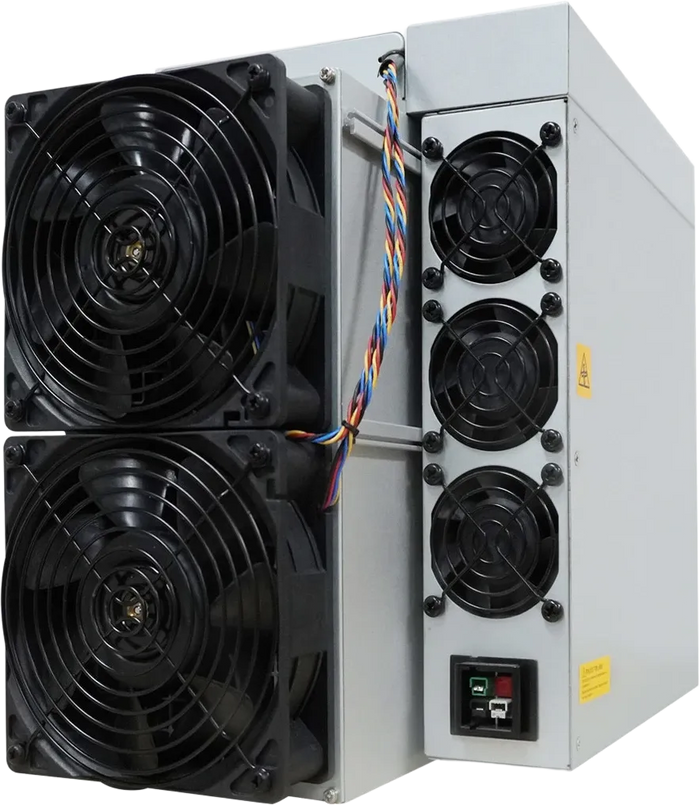
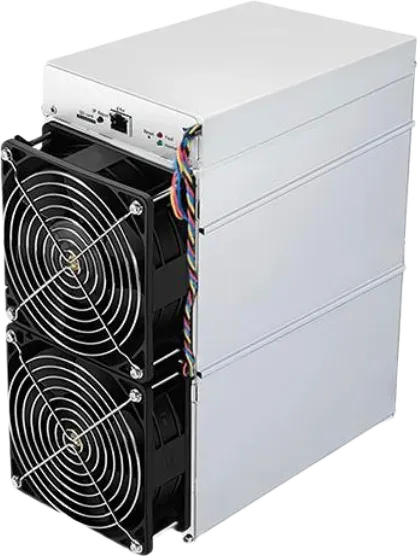
| ASIC | Algorithm | Mines | Hashrate | Power | Gross / day* |
|---|---|---|---|---|---|
| Antminer S23 Hydro | SHA-256 | Bitcoin (BTC) | 580 TH/s | ~5,510 W | ~$19.00 |
| Antminer S23 Hydro 3U | SHA-256 | Bitcoin (BTC) | 1.16 PH/s | ~11,020 W | ~$38.00 |
| Antminer Z15 Pro | Equihash | Zcash (ZEC) | ~860 KH/s | ~2,849 W | ~$24.00 |
| Antminer L11 Hyd 2U | Scrypt | Litecoin + Dogecoin | 35 GH/s | ~5,775 W | ~$20.00 |
| Whatsminer M63S Hydro | SHA-256 | Bitcoin (BTC) | 390 TH/s | ~7,215 W | ~$14.45 |
| Antminer KS5 Pro | kHeavyHash | Kaspa (KAS) | 21 TH/s | ~3,150 W | ~$4.15 |
Z15 Pro disclosure: two reputable trackers disagreed on the same day — MiningNow showed ~$24.77/day gross while ASIC Miner Value showed ~$32/day (ZEC-only), a ~33% spread driven by Zcash's volatility. We use the conservative ~$24/day throughout the tables. At the higher ~$32 figure the Z15 Pro's economics improve sharply — its net would rise toward ~$29/day at Nigeria's rate and it would challenge the S23 Hydro 3U for the #1 spot in the race below. This is exactly why we treat altcoin miners as a moving range, not a fixed number.
OneMiners hosting rates used in this comparison
The whole question is what happens when these machines are hosted through OneMiners. These are the long-term hosting electricity rates we run every calculation against — used exactly, not rounded.
| Location | Long-term rate | Capacity / note |
|---|---|---|
| Nigeria | $0.036/kWh | 33 MW live, major expansion under construction |
| Ethiopia | $0.0399/kWh | 40 MW, hydro-powered |
| UAE — Dubai & Abu Dhabi | $0.042/kWh | 34 MW |
| Finland | $0.0448/kWh | 22 MW, cold-climate |
| Norway — Arctic | $0.0448/kWh | 36 MW, cold-climate |
| USA — Regional network | $0.0455/kWh | New York, Georgia, South Carolina, Houston, Kansas, Texas |
| China — Dedicated | $0.0462/kWh | 288 MW |
| Canada | $0.0476/kWh | 36 MW |
| Paraguay | $0.0483/kWh | 12 MW |
| Brazil | $0.0483/kWh | 26 MW |
| Kazakhstan | $0.049/kWh | 24 MW |
| USA — Flagship | $0.055/kWh | 336+ MW live capacity |
| Czechia | $0.0665/kWh | 10 MW |
How we calculate mining profitability
Three plain formulas do all the work. No magic.
1 — Electricity cost
Daily electricity = power (kW) × 24 × rate ($/kWh)
Example, an S23 Hydro (5.51 kW) at Nigeria's $0.036: 5.51 × 24 × $0.036 = $4.76/day.
2 — Net daily income & time to 1 BTC equivalent
Net daily = gross mining revenue − daily electricity
Days to 1 BTC eq. = BTC price ÷ net daily → years = days ÷ 365. For altcoin miners the gross is the mined coin's value; we deduct power, get net USD, then convert to BTC equivalent at $64,190.
3 — How many miners for 1 BTC equivalent per year
Annual net per miner = net daily × 365 → miners needed = BTC price ÷ annual net per miner, always rounded up to a whole machine.
If the math says 7.2 miners, the answer is 8. You can't run two-tenths of an ASIC.
Unless stated otherwise, the tables assume theoretical 100% uptime; we show a 98% operational scenario separately below. You can model your own hardware and rate on the OneMiners mining calculators.
Race to 1 BTC: which ASIC gets there fastest?
Ranked by estimated time for one machine to net 1 BTC of value at the lowest-cost OneMiners hosting (Nigeria, $0.036/kWh, 100% uptime). Note this is ranked on net economic output converted to BTC equivalent — not hashrate, which can't be compared across algorithms.
Two lessons jump out. First, the highest hashrate number doesn't win — the Z15 Pro's "860 KH/s" beats the single S23 Hydro's "580 TH/s" on net economics, because they mine different coins. Second, in this depressed-price snapshot, coins like Kaspa barely clear their own power bill, so a KS5 Pro would need over 100 units to notch 1 BTC of value in a year. Algorithm and coin choice matter as much as the spec sheet.
| ASIC | Algo | Power | Net/day | Net/mo | Net/yr | Time to 1 BTC eq. | Miners / 1 BTC eq./yr |
|---|---|---|---|---|---|---|---|
| S23 Hydro 3U | SHA-256 | 11,020 W | $28.48 | $866 | $10,395 | ~6.2 yrs | 7 |
| Z15 Pro | Equihash | 2,849 W | $21.54 | $655 | $7,862 | ~8.2 yrs | 9 |
| L11 Hyd 2U | Scrypt | 5,775 W | $15.01 | $456 | $5,479 | ~11.7 yrs | 12 |
| S23 Hydro | SHA-256 | 5,510 W | $14.24 | $433 | $5,197 | ~12.4 yrs | 13 |
| M63S Hydro | SHA-256 | 7,215 W | $8.22 | $250 | $2,999 | ~21.4 yrs | 22 |
| KS5 Pro | kHeavyHash | 3,150 W | $1.43 | $43 | $521 | ~123 yrs | 124 |
One miner vs 5 vs 10
A single machine takes years. But mining income scales linearly with hardware — five machines earn five times as much and reach 1 BTC roughly five times faster. Here are the two headline machines at Nigeria's rate.
Antminer S23 Hydro (Bitcoin) — $0.036/kWh
1 miner
5 miners
10 miners
Antminer Z15 Pro (Zcash → BTC equivalent) — $0.036/kWh
1 miner
5 miners
10 miners
How many miners for 1 BTC equivalent per year?
This is the cleanest way to size a target. Take annual net income per miner, divide the BTC price by it, round up. At Nigeria's $0.036/kWh:
S23 Hydro 3U: 7 · Z15 Pro: 9 · S23 Hydro: 13
Whole machines needed to net roughly 1 BTC of value per year at Aug 2026 economics on lowest-cost hosting. Slower machines need more: L11 Hyd 2U ~12, M63S Hydro ~22, KS5 Pro ~124.
This is a snapshot sizing, not a prediction that those exact machines will produce exactly 1 BTC over the next twelve months. If Bitcoin's price rises, you need fewer; if difficulty climbs or coin prices fall, you need more.
Does hosting location change the answer?
Yes — and here's the proof rather than the slogan. Same S23 Hydro, same Bitcoin, same day; the only thing changing is the plug it's connected to.
| Location | Rate | Elec/day | Net/day | Net/month | Net/year | Time to 1 BTC eq. | Miners / 1 BTC/yr |
|---|---|---|---|---|---|---|---|
| Nigeria | $0.036 | $4.76 | $14.24 | $433 | $5,197 | ~12.4 yrs | 13 |
| Ethiopia | $0.0399 | $5.28 | $13.72 | $417 | $5,009 | ~12.8 yrs | 13 |
| UAE | $0.042 | $5.55 | $13.45 | $409 | $4,908 | ~13.1 yrs | 14 |
| Finland | $0.0448 | $5.92 | $13.08 | $397 | $4,773 | ~13.4 yrs | 14 |
| Norway | $0.0448 | $5.92 | $13.08 | $397 | $4,773 | ~13.4 yrs | 14 |
| USA Regional | $0.0455 | $6.02 | $12.98 | $395 | $4,739 | ~13.5 yrs | 14 |
| China | $0.0462 | $6.11 | $12.89 | $392 | $4,705 | ~13.6 yrs | 14 |
| Canada | $0.0476 | $6.29 | $12.71 | $386 | $4,637 | ~13.8 yrs | 14 |
| Paraguay | $0.0483 | $6.39 | $12.61 | $383 | $4,604 | ~13.9 yrs | 14 |
| Brazil | $0.0483 | $6.39 | $12.61 | $383 | $4,604 | ~13.9 yrs | 14 |
| Kazakhstan | $0.049 | $6.48 | $12.52 | $381 | $4,570 | ~14.0 yrs | 15 |
| USA Flagship | $0.055 | $7.27 | $11.73 | $356 | $4,280 | ~15.0 yrs | 15 |
| Czechia | $0.0665 | $8.79 | $10.21 | $310 | $3,725 | ~17.2 yrs | 18 |
The gap: at Nigeria the S23 Hydro nets $5,197/year; at Czechia, $3,725/year. That's $1,472 less per machine, every year — and it stretches the 1-BTC-equivalent timeline from ~12.4 to ~17.2 years, and pushes the fleet you'd need from 13 to 18 machines. Same hardware, same coin, purely the rate.
| Location | Rate | Net/day | Net/year | Time to 1 BTC eq. | Miners / 1 BTC/yr |
|---|---|---|---|---|---|
| Nigeria | $0.036 | $21.54 | $7,862 | ~8.2 yrs | 9 |
| USA Regional | $0.0455 | $20.89 | $7,624 | ~8.4 yrs | 9 |
| USA Flagship | $0.055 | $20.24 | $7,387 | ~8.7 yrs | 9 |
| Czechia | $0.0665 | $19.45 | $7,100 | ~9.0 yrs | 10 |
Because the Z15 Pro draws far less power, the rate moves its numbers less — a reminder that efficiency and power draw decide how much the electricity rate can hurt you. The thirstier the machine, the more the rate matters.
Nigeria example — $0.036/kWh (lowest-cost scenario)
Take the power-hungry S23 Hydro 3U (11.02 kW). At Nigeria's $0.036:
- Power cost/day: 11.02 × 24 × $0.036 = $9.52
- Gross revenue/day: ~$38.00
- Net/day: ~$28.48 → Net/year: ~$10,395
- Miners for 1 BTC eq./year: 7
This is exactly where a thirsty, high-output machine benefits most from a low rate — the cheaper the power, the more of that $38/day gross you keep. OneMiners' Nigeria site runs 33 MW today with a major expansion under construction.
Ethiopia example — $0.0399/kWh (hydro)
Same S23 Hydro 3U at Ethiopia's hydro-powered $0.0399:
- Power cost/day: $10.55 (about $1.03/day more than Nigeria)
- Net/day: ~$27.45 → Net/year: ~$10,020 (about $375/yr less than Nigeria)
- 1-BTC-equivalent timeline: essentially unchanged at ~6.4 yrs; still 7 miners for 1 BTC eq./yr
A tenth of a cent barely moves a single machine — but as we'll see, multiply it by a big fleet and it becomes real money. Ethiopia is a 40 MW hydro-powered operation.
UAE example — $0.042/kWh (premium infrastructure)
The jump from Nigeria's $0.036 to the UAE's $0.042 looks trivial — just 0.6 cents/kWh. But you pay it on every kilowatt, 24 hours a day, 365 days a year. For one S23 Hydro 3U:
- Extra cost: 11.02 kW × 24 × 365 × $0.006 = ~$579/year per machine
- Across a 10-machine deployment: ~$5,792/year
That "tiny" 0.6¢ quietly becomes nearly six thousand dollars a year on ten thirsty machines. It's the clearest lesson in mining economics: small per-kWh differences compound relentlessly. OneMiners' UAE footprint (Dubai & Abu Dhabi) is 34 MW.
Norway & Finland example — $0.0448/kWh
Europe's cold-climate sites give a useful mid-table comparison. One S23 Hydro at $0.0448 nets ~$13.08/day (~$4,773/year) — versus ~$14.24/day (~$5,197) in Nigeria and ~$10.21/day (~$3,725) in Czechia. So Norway/Finland sit almost exactly where you'd expect: a few hundred dollars a year below Nigeria, comfortably above Czechia. Naturally cold air also helps cooling overhead. Finland runs 22 MW; Norway's Arctic site 36 MW.
USA Regional example — $0.0455/kWh
OneMiners' regional U.S. network — New York, Georgia, South Carolina, Houston, Kansas and Texas — carries a long-term rate of $0.0455/kWh. One S23 Hydro there nets ~$12.98/day (~$4,739/year), needing about 14 machines for 1 BTC eq./year. (This is a separate contract from the U.S. Flagship rate below — don't combine them.)
China / Canada / South America / Kazakhstan comparison
The mid-band rates cluster tightly. For one S23 Hydro (net/year, 1-BTC timeline):
| Location | Rate | Net/year | Time to 1 BTC eq. | Miners / 1 BTC/yr |
|---|---|---|---|---|
| China Dedicated (288 MW) | $0.0462 | $4,705 | ~13.6 yrs | 14 |
| Canada (36 MW) | $0.0476 | $4,637 | ~13.8 yrs | 14 |
| Paraguay (12 MW) | $0.0483 | $4,604 | ~13.9 yrs | 14 |
| Brazil (26 MW) | $0.0483 | $4,604 | ~13.9 yrs | 14 |
| Kazakhstan (24 MW) | $0.049 | $4,570 | ~14.0 yrs | 15 |
Across this whole band the single-machine answer only moves from 14 to 15 miners — the differences are real but modest at one unit. They become significant only at scale.
Czechia example — $0.0665/kWh
Czechia's $0.0665/kWh is the highest rate in the network — and that's not a knock on the site. Different locations serve different priorities: proximity to European buyers, logistics, regional preference, redundancy. What the math shows objectively is the cost of that choice for a power-hungry machine.
One S23 Hydro at Czechia nets ~$10.21/day (~$3,725/year) — versus $5,197 in Nigeria. The 1-BTC-equivalent timeline stretches to ~17.2 years, and you'd need 18 machines for 1 BTC eq./year instead of 13. Czechia runs 10 MW.
What a fraction of a cent does over one year
Here's the section to internalise. Take the thirstiest machine, the S23 Hydro 3U, and just look at its annual electricity bill — ignore revenue entirely. Annual consumption: 11.02 kW × 24 × 365 = 96,535 kWh.
| Rate | Annual electricity (1 unit) | vs Nigeria (1 unit) | vs Nigeria (10 units) |
|---|---|---|---|
| $0.036 (Nigeria) | $3,475 | — | — |
| $0.0399 (Ethiopia) | $3,852 | +$376 | +$3,765 |
| $0.042 (UAE) | $4,054 | +$579 | +$5,792 |
| $0.0448 (Nor/Fin) | $4,325 | +$850 | +$8,495 |
| $0.0455 (USA Regional) | $4,392 | +$917 | +$9,171 |
| $0.0462 (China) | $4,460 | +$985 | +$9,847 |
| $0.0476 (Canada) | $4,595 | +$1,120 | +$11,198 |
| $0.0483 (Para/Brazil) | $4,663 | +$1,187 | +$11,874 |
| $0.049 (Kazakhstan) | $4,730 | +$1,255 | +$12,550 |
| $0.055 (USA Flagship) | $5,309 | +$1,834 | +$18,342 |
| $0.0665 (Czechia) | $6,420 | +$2,944 | +$29,443 |
The spread between the cheapest and priciest rate is $2,944/year on a single machine — and $29,443/year across ten. That is money that comes straight out of net profit before you mine a single satoshi of extra value. This is why professional operators obsess over the rate: it's the one big cost you can lock in, and it compounds every hour the machine is on.
What would a 1-BTC-per-year mining setup look like?
Putting hardware cost against output — using verified OneMiners store prices (Aug 2026) for the three machines we can price reliably, at Nigeria's $0.036/kWh, 100% uptime. Prices for the L11, KS5 Pro and M63S weren't reliably verifiable this snapshot, so we omit them rather than guess.
| Miner | Unit price | Machines needed | Hardware cost | Total power | Annual electricity | Est. BTC eq./yr |
|---|---|---|---|---|---|---|
| Antminer S23 Hydro 3U | $28,399 | 7 | $198,793 | 77.1 kW | $24,327 | ~1.13 BTC eq. |
| Antminer Z15 Pro | $7,350 | 9 | $66,150 | 25.6 kW | $8,086 | ~1.10 BTC eq. |
| Antminer S23 Hydro | $12,299 | 13 | $159,887 | 71.6 kW | $22,589 | ~1.05 BTC eq. |
The counts are rounded up to whole machines, so each fleet slightly overshoots 1 BTC of value per year at the snapshot. The Z15 Pro fleet is by far the cheapest way to get there on paper — but it's a bet on Zcash, whose price swings hard, whereas the S23 fleets are a bet on Bitcoin itself. Cheaper entry, different risk. Compare live pricing on current ASIC miners and the Antminer S23 series before sizing your own.
Why we assume hosted mining, not a spare room
Every machine here draws several kilowatts continuously and runs loud and hot — the S23 Hydro 3U alone pulls 11 kW, more than a whole house. Running that at a typical home rate of $0.12–$0.15/kWh usually erases the profit entirely, and hydro units need proper cooling loops most homes can't provide. That's why the whole article prices power at OneMiners hosting rates.
Mentioned once, plainly: OneMiners hosting bundles electricity, installation and management, maintenance, monitoring, on-site support, remote control via the OneMiners app, a 7-year hardware warranty, and typical uptime of 98%+ with a 95% guaranteed floor. Now back to the numbers.
What the calculations assume about uptime
The tables above use theoretical 100% uptime. No machine runs flawlessly all year, so here's a realistic 98% operational scenario — adjusted annual output = theoretical × 0.98 — for the S23 Hydro at Nigeria:
| Scenario | Net/year | Time to 1 BTC eq. |
|---|---|---|
| 100% uptime (theoretical) | $5,197 | ~12.4 yrs |
| 98% uptime (operational) | $5,059 | ~12.7 yrs |
Uptime is quietly one of the biggest real-world levers — a machine that keeps tripping offline in a hot garage can lose to a "less profitable" one that simply keeps hashing. Actual output also varies with network difficulty, coin price, block rewards, pool luck and performance, machine efficiency, downtime, maintenance, coin switching and broader market conditions.
Why "time to 1 BTC" is not a promise
Every figure here is a snapshot based on current market conditions. You cannot take today's daily profit, multiply by 365, and treat it as guaranteed future income. Bitcoin difficulty changes. Altcoin difficulty changes. BTC and altcoin prices change. Block rewards change. Hardware efficiency evolves.
So read every timeline as "if today's mining economics remained unchanged…" — never as "this miner will earn 1 BTC in X years." That distinction is the difference between analysis and a sales pitch. The honest version is the analysis.
Which miner makes the most sense?
Final takeaway
There's no single "best" miner or "best" facility. The result depends on the whole equation: ASIC price + gross mining revenue + power consumption + electricity rate + uptime + network conditions + your preferred coin and algorithm.
But the mathematical lesson is clear and it never changes. For a machine running 24 hours a day, 365 days a year, electricity price compounds continuously. A difference that looks tiny per kWh — six-tenths of a cent — became $579 a year on one thirsty machine and nearly $30,000 a year across ten. That's why the operators who win are simply the ones paying the least for reliable power.
You should now be able to answer three questions at a glance: which ASIC generates the most net mining value today (the S23 Hydro 3U in this snapshot), how many of it you'd need for 1 BTC eq./year (about 7 on cheap hosting), and how much a lower-cost OneMiners location changes that number (from 7–13 machines up to 18 as the rate climbs).
Run your own route to 1 BTC
Compare ASIC miners, choose your preferred hosting location, and calculate your own timeline — with real prices and real rates, not a screenshot.
Open the OneMiners calculators →FAQ
- How many ASIC miners do you need to earn 1 Bitcoin in 2026?
- At the August 2026 snapshot (BTC ~$64,190) on lowest-cost hosting, about 7 Antminer S23 Hydro 3U units, 9 Z15 Pro, or 13 S23 Hydro would net roughly 1 BTC of value per year. A single machine takes years on its own. Numbers rise if the coin price falls or difficulty climbs.
- Does a Z15 Pro mine Bitcoin?
- No. The Z15 Pro is an Equihash machine that mines Zcash (ZEC) and similar coins. We convert its net Zcash income into a BTC-equivalent value for comparison — it never produces Bitcoin directly.
- Why can't you compare 580 TH/s to 860 KH/s?
- They measure different algorithms — SHA-256 versus Equihash — in different units. The only fair comparison is net economic output, which is why we convert everything to BTC-equivalent value.
- How much does electricity rate really change the answer?
- A lot, for thirsty machines. One S23 Hydro nets $5,197/year at Nigeria's $0.036/kWh but $3,725 at Czechia's $0.0665 — $1,472 less per machine per year, stretching the 1-BTC timeline from ~12.4 to ~17.2 years.
- Do these figures assume 100% uptime?
- The main tables use theoretical 100% uptime. We also show a 98% operational scenario (annual output × 0.98). Real output varies with difficulty, coin price, block rewards, pool performance, maintenance and downtime.
- Is this a guarantee of future income?
- No. Every figure is a snapshot of current conditions. Read timelines as "if today's economics held" — not as a promise. Mining carries real risk, including loss.
For general information only — not financial or investment advice. Profitability snapshot: August 12, 2026, with Bitcoin ~$64,190 and network difficulty ~127.5 T. Figures combine manufacturer spec-sheet numbers and third-party profitability estimates (WhatToMine, MiningNow, ASIC Miner Value, CoinWarz, CoinMarketCap) captured Aug 12, 2026, plus company-reported OneMiners hosting rates. Gross mining revenue is distinguished from net income throughout; non-Bitcoin miners are shown as BTC-equivalent economic output, not direct BTC production. Machine counts are rounded up to whole units. Mining economics — coin prices, difficulty, block rewards and hardware efficiency — change constantly; verify all specs, prices and rates before purchasing. Cryptocurrency mining carries risk, including the risk of loss.


