


The Ultimate Guide to Zcash Mining in 2026
Best Zcash ASIC miners, real specs and prices, profitability, and why professionals host their machines with OneMiners.
Zcash is having its biggest moment in years. After the SEC quietly closed its long-running investigation in January 2026, ZEC rallied roughly 650–1,000% from its 2024 lows, peaked near $642 in May 2026, and overtook Monero to become the largest privacy coin by market capitalization. A pending Grayscale spot ETF filing and a 2024 halving that cut new-coin issuance from ~4% to ~2% a year have only added fuel.
That renewed attention has miners asking a very practical question: if privacy coins are back, is it worth mining Zcash again — and which machine actually makes sense in 2026? This guide answers both, with real hardware, real prices, a clear profitability framework, and an honest look at what determines whether your machine earns.
ZEC — the 2026 privacy-coin rally
Illustrative shape of ZEC's 2026 recovery. Prices move fast — always check a live source before you invest.
What Is Zcash?
Zcash (ZEC) is one of the oldest privacy-focused cryptocurrencies, launched in 2016. Like Bitcoin, it has a fixed maximum supply of 21 million coins. Unlike Bitcoin, it lets users choose between transparent transactions (visible on-chain, like Bitcoin) and shielded transactions that hide the sender, receiver, and amount using zero-knowledge cryptography (zk-SNARKs).
Why privacy went mainstream in 2026
Zcash's standout feature is the view key — a credential that lets a holder selectively reveal a transaction to an auditor or tax authority without exposing it publicly. That "private by default, compliant on demand" model is exactly why institutions grew comfortable with ZEC this year, and it's a big part of the rally story.
Zcash lets each transaction be public or private — a flexibility Bitcoin doesn't offer.
Crucially for us, Zcash still uses Proof of Work. Anyone with the right ASIC hardware can help secure the network and earn block rewards — which is what makes mining it a real option in 2026.
How Does Zcash Mining Work?
Zcash runs on the Equihash algorithm (measured in Solutions per second, or Sol/s; many shops, including product listings, label this "KH/s"). Mining is the process of racing to solve a cryptographic puzzle for each new block. Here is the loop, simplified:
Your miner joins a pool → the pool finds blocks → rewards are split by the work you contributed.
A few terms worth knowing:
- Blocks & rewards: new ZEC is issued to whoever helps confirm each block. The 2024 halving cut that reward in half, tightening supply.
- Network difficulty: automatically rises as more hashpower joins, keeping block times steady. As of mid-2026, Equihash difficulty sits around 180M with the network near 19–20 PH/s.
- Mining pools: solo mining is a lottery; pools combine hashpower and pay steady, proportional rewards. This is what almost every miner should use.
- Electricity: after hardware, power is your single largest cost — and the number one factor that decides whether you profit.
Why ASIC Miners Are Required
Zcash could once be mined with GPUs. But as difficulty climbed, purpose-built ASIC (Application-Specific Integrated Circuit) machines became dramatically faster and more energy-efficient — to the point that GPU mining is no longer competitive on Equihash. Today, virtually all serious Zcash mining runs on Bitmain's Antminer Z-series, and specifically the Z15 family.
GPU vs ASIC in one line
A modern Equihash ASIC delivers orders of magnitude more Sol/s per watt than a graphics card. Trying to mine ZEC on GPUs in 2026 means paying more for electricity than you earn.
The Evolution of Zcash ASIC Miners
Each generation roughly multiplied hashrate while improving efficiency. Here's the lineage that brought us to today's Z15 Pro:
| Miner | Released | Hashrate | Power | Note |
|---|---|---|---|---|
| Antminer Z9 Mini | 2018 | 10 KSol/s | 300 W | The historic first step |
| Antminer Z11 | 2019 | 135 KSol/s | 1,418 W | Big leap forward |
| Antminer Z15 | 2020 | 420 KSol/s | 1,510 W | The long-time workhorse |
| Antminer Z15 Pro | 2024–26 | up to 860 KSol/s | up to 2,849 W | Current flagship family TOP |
Hashrate growth across the Antminer Z-series (Sol/s). Bars animate on load.
The Antminer Z15 Pro Series, Explained
The Antminer Z15 Pro is the highest dedicated Equihash output Bitmain ships — up to double the classic Z15 on the same algorithm. OneMiners stocks the full family, from the original Z15 to power-tuned Pro variants at 800, 820, 840, and 860 KSol/s, all in the same 3.31 J/KSol efficiency class. Prices and estimated daily earnings below are live from the OneMiners catalog.
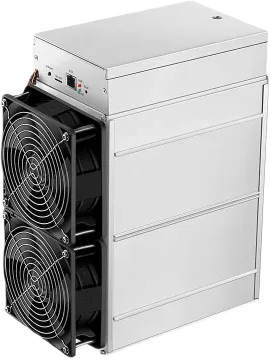
Antminer Z15 · 420 KSol/s
The proven, lowest-cost way into Zcash mining. Released 2020, ~1,510 W. Still viable where power is cheap, and the friendliest entry ticket for a first machine.
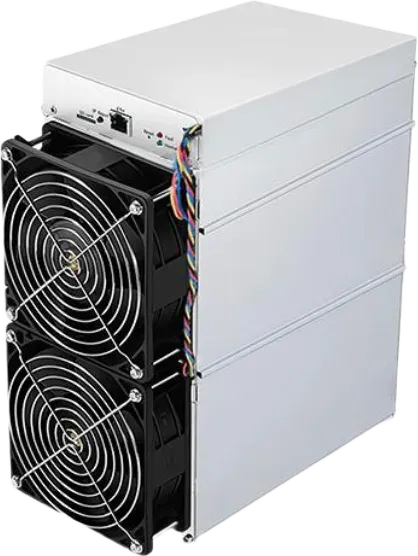
Antminer Z15 Pro · 800 KSol/s
The budget-professional tuning: ~2,651 W and the same 3.31 J/KSol efficiency class. Slightly lower draw makes it kind to tighter power budgets while staying firmly in the Pro tier.
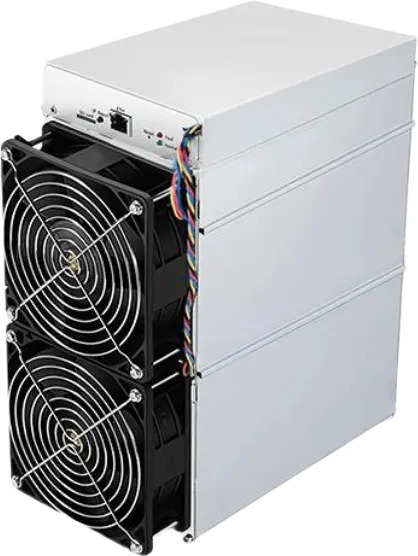
Antminer Z15 Pro · 820 KSol/s
The balanced pick: ~2,716 W. A middle tuning that most hosted miners are happy with — a sensible blend of output, heat, and running cost.
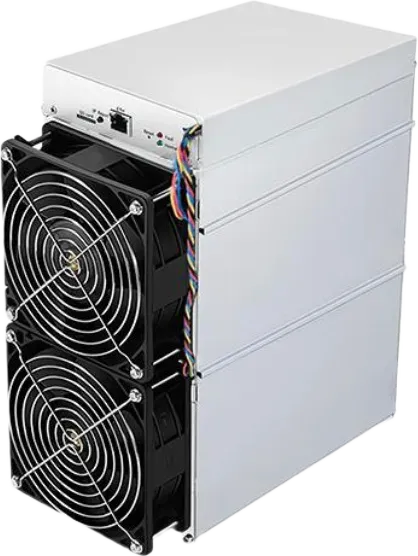
Antminer Z15 Pro · 840 KSol/s FLAGSHIP
Bitmain's headline Z15 Pro and the industry reference: 840 KSol/s at 2,780 W, 3.31 J/KSol, 12nm dual-fan design, running on 200–240 V. The best all-round value in the family.
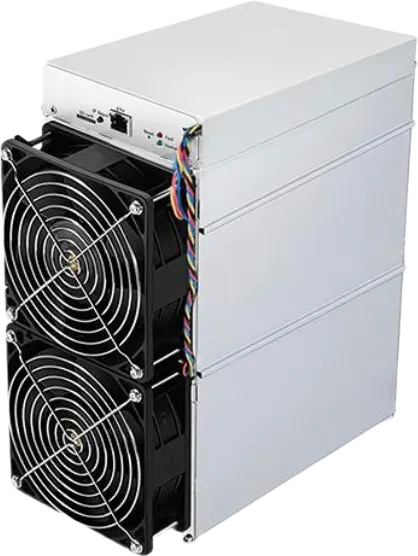
Antminer Z15 Pro · 860 KSol/s
The maximum-performance tuning: ~2,849 W for the highest Sol/s in the family. For miners who want every last solution and have the cooling and cheap power to feed it.
Buying tip: future-batch pre-orders
Beyond in-stock units, OneMiners lists future-batch pre-orders of the Z15 Pro 840 from around $3,499 (later delivery dates). If you can wait for a scheduled batch, it's the cheapest route to the flagship — check current batch pricing on the Zcash Miners collection.
Full Specification & Price Comparison
| Model | Hashrate | Power | Efficiency | Price | Est. $/day* |
|---|---|---|---|---|---|
| Antminer Z15 | 420 KSol/s | 1,510 W | ~3.6 J/KSol | $3,599 | — |
| Z15 Pro 800 | 800 KSol/s | 2,651 W | 3.31 J/KSol | $6,889 | ~$29.02 |
| Z15 Pro 820 | 820 KSol/s | 2,716 W | 3.31 J/KSol | $7,059 | ~$29.70 |
| Z15 Pro 840 | 840 KSol/s | 2,780 W | 3.31 J/KSol | $7,199 | ~$30.31 |
| Z15 Pro 860 | 860 KSol/s | 2,849 W | 3.31 J/KSol | $7,350 | ~$31.20 |
*Estimated gross daily earnings per the OneMiners listing at current network conditions, before electricity and fees. See disclaimer.
Efficiency class: 3.31 J/KSol
Lower is better. The whole Z15 Pro family lands in the same efficiency class.
Which Zcash Miner Is Most Profitable?
It's tempting to just pick the highest hashrate — but the "most profitable" machine depends on your electricity price and goals. Here's the quick matrix:
| Model | Best for |
|---|---|
| Z15 (420) | Lowest upfront investment |
| Z15 Pro 800 | Budget professional setup |
| Z15 Pro 820 | Balanced ROI |
| Z15 Pro 840 | Best overall value |
| Z15 Pro 860 | Maximum performance |
Profit is a formula, not a hashrate
Real-world profitability comes down to:
- ZEC market price
- Network mining difficulty
- Pool fees
- Electricity cost per kWh
- Hosting, cooling & uptime
Profit ≈ ZEC earned × price − (electricity + pool fees + hosting). Two identical machines can have wildly different bottom lines based on power price alone.
Why Hosting Matters More Than Buying the Miner
Most beginners obsess over which ASIC to buy — then plug it in at home at $0.12/kWh and watch the profit evaporate. A Z15 Pro pulls close to 2.8 kW continuously; that's roughly the draw of a large air conditioner running 24/7, plus serious heat and noise (and it needs 200–240 V, not a standard household outlet). Long-term returns are decided less by the machine and more by where it runs.
Same miner, different power price
Electricity cost per kWh is the single biggest lever on mining profit. Lower bar = lower cost = more margin.
This is where professional hosting changes the math. According to OneMiners, its hosting model is built specifically to protect long-term profitability with fixed, long-term electricity pricing, extended warranties, insurance, and high-uptime infrastructure — the things that quietly decide whether a machine earns for years or stalls out.
Why Mine With OneMiners?
OneMiners operates a global network of mining facilities across the USA, Europe, Africa, and the Middle East, letting customers pick a location by electricity cost, climate, and availability. Rather than an advertisement, here are the measurable benefits it publishes:
20 hosting sites across 6 continents — with power fixed for 7 years, you mine where electricity is cheapest and most reliable.
Benefits OneMiners highlights
- 7-year warranty — among the longest in the industry
- Fixed, prepaid electricity pricing (up to ~30% below market)
- Insurance included on all hosted equipment
- Real-time monitoring via iOS & Android app
- 95%+ uptime SLA, financially backed
- Multiple hosting locations worldwide, with free relocation
Is Zcash Mining Still Worth It?
Pros
- Established privacy coin with strong 2026 momentum
- Mature, well-supported ASIC ecosystem
- Efficient, purpose-built hardware available
- Tighter supply after the 2024 halving
Cons
- −Profit depends on volatile ZEC price
- −Difficulty can rise and cut rewards
- −Electricity is the biggest ongoing cost
- −Upfront ASIC investment is significant
The honest answer: Zcash mining is worth it if you pair efficient hardware with genuinely cheap, reliable power — which is exactly the gap professional hosting closes.
Ready to mine Zcash the professional way?
Compare Z15 Pro models, lock in fixed low electricity, and let OneMiners host, insure, and monitor your machine — so you keep more of what you mine.
Explore Zcash Miners & Hosting →
Frequently Asked Questions
Not competitively anymore. Equihash ASICs are far more efficient, so GPU mining now typically costs more in power than it earns.
The Antminer Z15 Pro is the go-to family for 2026. The 840 KSol/s model is Bitmain's headline reference and the best all-round value; the 860 KSol/s tuning gives the highest raw output.
Roughly 2.65–2.85 kW continuously depending on the tuning — about 2,780 W for the standard 840 KSol/s model, on 200–240 V.
At OneMiners, the Z15 (420) starts around $3,599, and the Z15 Pro family runs about $6,889–$7,350 for in-stock units. Future-batch pre-orders of the 840 start near $3,499.
It can be, especially with low power costs and efficient hardware. Profitability depends on ZEC price, network difficulty, pool fees, electricity, and hosting — not hashrate alone.
A closed SEC investigation, a pending Grayscale spot ETF filing, tighter post-halving supply, and renewed demand for compliant privacy drove ZEC to become the largest privacy coin by market cap.


