


The Antminer Z15 Pro — the workhorse of modern Zcash mining.
The Complete Guide to Zcash Mining & the Antminer Z15 Range
What Zcash is, how it's mined, every Antminer Z-series machine, and how to actually turn a Z15 into profit in 2026.
Zcash is having its biggest moment in years, and miners are asking a simple question: is it worth mining, and which machine makes sense? This guide answers both from the ground up — what the coin is, how its mining actually works, the full history of Antminer Z-series hardware, and a dated, honest look at profitability. Every specification and figure here is sourced; every earnings number is an estimate tied to a date, never a promise.
1. Zcash in brief
Zcash (ZEC) is a privacy-focused cryptocurrency that launched in October 2016 — the first production blockchain to deploy zero-knowledge proofs (zk-SNARKs). It was created by the Electric Coin Company and is stewarded today alongside the non-profit Zcash Foundation. Like Bitcoin, it has a fixed 21 million coin supply.
What sets it apart is optional privacy. Zcash supports transparent addresses that work just like Bitcoin (fully public) and shielded addresses that hide the sender, receiver, and amount using zero-knowledge cryptography.
An honest accuracy point
Not every Zcash transaction is private — privacy is a choice, and funds in transparent addresses are fully public. The correct way to describe Zcash is "private when you want it to be," not "anonymous."
Crucially for miners, Zcash still runs on Proof of Work. Anyone with the right ASIC can help secure the network and earn block rewards — which is what keeps mining it a real option in 2026.
2. How Zcash mining works

Zcash uses the Equihash algorithm (specifically Equihash 200,9), a memory-hard proof of work. A few essentials:
- Solutions per second (Sol/s): Equihash miners are measured in solutions per second, not raw hashes. Machine ratings are in kSol/s — thousands of solutions per second — so the Z15's "420" means 420,000 solutions per second.
- Block time: 75 seconds.
- Block reward: the network issues a total of 1.5625 ZEC per block, of which miners receive 80% (1.25 ZEC); the rest funds community grants and a protocol reserve.
- Difficulty: rises automatically as more machines join, so each miner earns a smaller slice over time.
- Pools & wallets: almost everyone mines through a pool for steady payouts, sent to a Zcash wallet.
3. From GPUs to ASIC miners
Zcash could once be mined on graphics cards. But as difficulty climbed, purpose-built ASIC machines became dramatically faster and more efficient — to the point that GPU mining is no longer competitive on Equihash. When Bitmain announced the first Equihash ASIC in 2018, Bitcoin Gold even hard-forked to a different algorithm to stay ASIC-resistant. For Zcash itself, the ASICs won: by the time the Antminer Z15 arrived in 2020, GPU mining was finished. In 2026, serious Zcash mining is ASIC-only, and that means the Antminer Z-series.
4. The evolution of Zcash ASIC miners
| Miner | Released | Hashrate | Power | Efficiency |
|---|---|---|---|---|
| Antminer Z9 Mini | 2018 | 10 kSol/s | ~300 W | ~30 J/kSol |
| Antminer Z9 | 2018 | 42 kSol/s | 970 W | ~23 J/kSol |
| Antminer Z11 | 2019 | 135 kSol/s | 1,418 W | 10.5 J/kSol |
| Antminer Z15 | 2020 | 420 kSol/s | 1,510 W | 3.6 J/kSol |
| Antminer Z15 Pro | 2023 | 840 kSol/s | 2,780 W | 3.31 J/kSol |
5. The Antminer Z15 Pro range
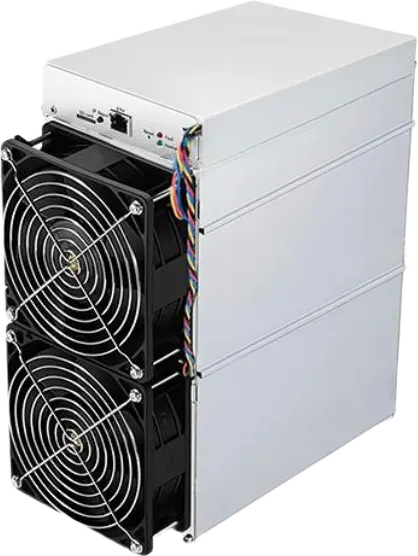
The Antminer Z15 Pro is the highest dedicated Equihash output Bitmain ships — double the classic Z15 on the same algorithm, at 840 kSol/s and 2,780 W. OneMiners stocks the full family, from the original Z15 to the Z15 Pro, across in-stock units and scheduled future batches.
About the 800 / 820 / 840 / 860 listings
Bitmain's one official Z15 Pro rating is 840 kSol/s. The 800, 820 and 860 figures you'll see are best understood as batch and configuration labels within the same hardware family rather than separate factory models — a fuller breakdown is coming in a dedicated article in this series.
6. Which Zcash miner is most profitable?

The "most profitable" machine depends on your electricity price. The formula is simple:
Profit ≈ ZEC earned × price − (electricity + pool fees + hosting)
Two identical machines can have completely different bottom lines based on power price alone.
Using calculator estimates on 21 July 2026 (ZEC ≈ $540, at current network difficulty), a Z15 Pro earns roughly $29–31/day gross and a Z15 roughly $14–15/day, before electricity. Here's how power cost changes the picture:
| Daily electricity (Z15 Pro, 2.78 kW) | Nigeria $0.036 | Ethiopia $0.0399 | Home $0.12 |
|---|---|---|---|
| Electricity cost / day | $2.40 | $2.66 | $8.01 |
| Estimated net (gross − power) | ~$26.6 | ~$26.3 | ~$21.0 |
At hosted rates (~$0.036–0.04/kWh) electricity is a rounding error; at a home rate it eats a real slice of the margin. These are estimates for a single day and change with ZEC's price and difficulty — see the disclaimer below.
7. Buying versus hosting
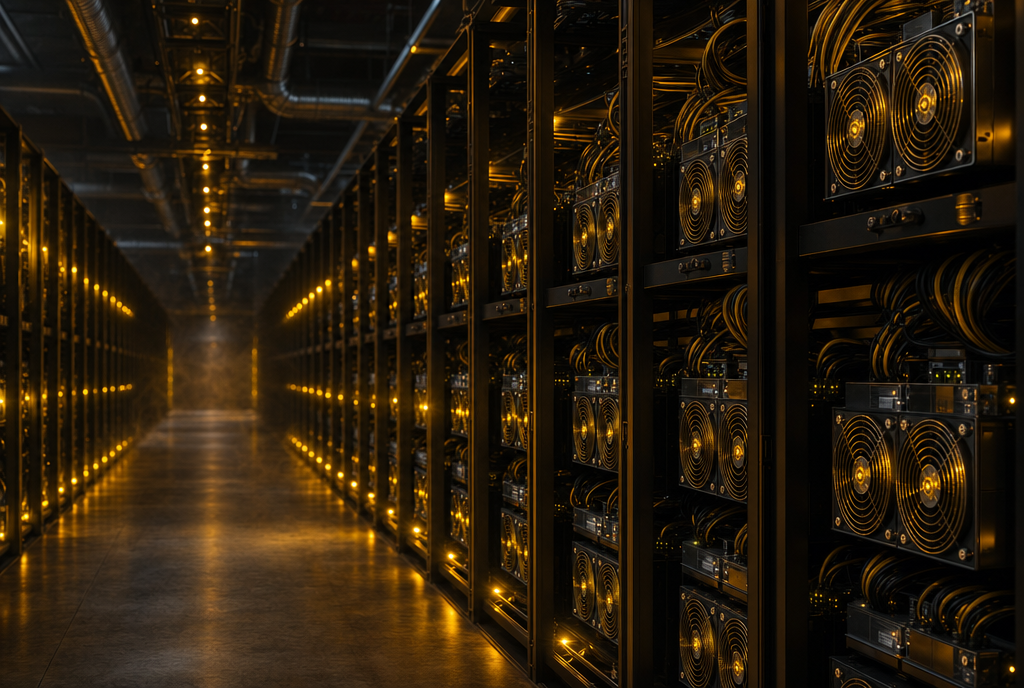
A Z15 Pro pulls close to 2.8 kW continuously, needs 200–240 V, and runs loud and hot. That makes home mining viable only with cheap power and tolerance for the noise. For most people the economics favour hosting: a facility runs the machine at industrial electricity rates and handles cooling, uptime, and repairs. On a single Z15 Pro, the gap between a home rate and a hosted rate is worth roughly $5–6 a day.
OneMiners operates a global network of facilities and offers Zcash hosting built around low fixed power pricing, extended warranty, and high-uptime infrastructure — the factors that quietly decide whether a machine earns for years.
8. Risks to keep in mind
- Price volatility — mining revenue moves directly with ZEC's price.
- Rising difficulty — every new machine lowers everyone's share.
- Halvings — the miner reward is now 1.25 ZEC and halves again around 2028.
- Operating costs — pool fees, downtime, repairs (fans are the most common Z15 wear item), and resale value all matter.
9. Frequently asked questions
Mine Zcash the professional way
Browse the full Antminer Z15 range and low-cost hosting at OneMiners — from your first machine to a hosted fleet.
Explore Zcash miners →


