


Lessons from Bitfinex: Why "Clean" Mined Bitcoin Outvalues Coins With a History
On 6 December 2024, Netflix released Biggest Heist Ever, Chris Smith’s documentary about Ilya Lichtenstein and his wife Heather Morgan — the rapper known online as Razzlekhan, and the couple the press christened crypto’s “Bitcoin Bonnie and Clyde.” The film landed weeks after both were sentenced, and it turned a case that compliance officers had been studying for years into mainstream entertainment.
The headline facts are spectacular. In August 2016, Lichtenstein breached the Bitfinex exchange and moved 119,754 BTC out of its wallets in roughly two thousand transactions. At the time those coins were worth around $71 million. By the time the couple were arrested in February 2022, the same stack was valued at more than $4.5 billion — and the U.S. Department of Justice recovered roughly 94,000 BTC of it in what was then the largest financial seizure in its history.
But the number that actually matters to anyone building a position in Bitcoin is a much smaller one: zero. That is roughly how much of the stolen stack the pair managed to convert into durable, spendable wealth over almost six years of trying. Lichtenstein received a five-year sentence in November 2024. Morgan received eighteen months. The lesson buried under the true-crime packaging is not about hacking at all.
Stealing Bitcoin turned out to be the easy part. Spending it turned out to be impossible.
What Actually Happened — A Six-Year Timeline
The Bitfinex case is worth walking through slowly, because each step reveals a different property of the Bitcoin ledger that ordinary investors rarely think about until an exchange asks them an uncomfortable question.
| Period | What happened | What it proved |
|---|---|---|
| Aug 2016 | 119,754 BTC moved out of Bitfinex in roughly 2,000 unauthorised transactions. | Custody is the single biggest point of failure in crypto. |
| 2017–2021 | Funds pushed through mixers, darknet markets, chain-hopping, gold purchases, NFTs and prepaid gift cards. | Obfuscation adds cost and delay, but it does not erase the ledger. |
| Jan 2022 | Investigators decrypted a cloud-stored file containing more than 2,000 wallet addresses and their private keys. | Operational security fails long before cryptography does. |
| Feb 2022 | Arrests in New York; roughly 94,000 BTC seized. | Blockchain analytics has no statute of limitations. |
| Nov 2024 | Lichtenstein sentenced to five years; Morgan to eighteen months. | Tainted coins are a liability that compounds with time. |
Read that timeline again with a miner’s eye. The couple controlled an asset that, on paper, made them among the wealthiest people in crypto. In practice they were reduced to buying gift cards. Their problem was never access. It was provenance.
The Permanent Ledger Cuts Both Ways
Bitcoin’s defining feature is that every transaction since the genesis block is public, permanent and independently verifiable. For a long-term holder that is the entire value proposition: nobody can inflate the supply, nobody can quietly rewrite the record, and anyone can audit the network from a laptop. Sites like btcfq.com exist precisely because those fundamentals are checkable by anyone who wants to check them.

The flip side is that the ledger never forgets. Every mixer hop, every exchange deposit, every peel chain and every consolidation is written down forever, and the analytics tooling that reads those patterns improves every year. A transaction that looked opaque in 2017 is trivially clustered in 2026. The coins do not get cleaner as time passes — the tools that read them get sharper.
The core insight: laundering is a race between the launderer and the analytics industry, and the launderer has to win permanently. The analyst only has to win once, at any point in the future. Bitfinex is what losing that race looks like.
Not All Bitcoin Is Created Equal
It is tempting to assume 1 BTC always equals 1 BTC. At the protocol level that is true — the network treats every satoshi identically, and no node will reject a valid transaction because it dislikes the coin’s past. Bitcoin is fungible where it counts: in consensus.
But you do not live at the protocol level. You live at the point where Bitcoin touches banks, exchanges, funds and tax authorities — and at that boundary, history is scored. In practice the market has split into two very different risk profiles.

| Dimension | Secondary-market BTC (coins with history) | Freshly mined BTC ("virgin" coins) |
|---|---|---|
| Origin | Dozens or hundreds of prior owners, exchanges, bridges, possibly mixers. | Created by the protocol as a block reward. No prior owner. |
| Transaction history | Long, branching, partly unknowable. | One entry: the coinbase transaction. |
| Typical AML risk score | Variable. A single tainted upstream hop can raise it. | Structurally low — there is nothing upstream to flag. |
| Off-ramp experience | Possible enhanced due diligence, source-of-funds requests, held deposits. | Usually a routine source-of-funds file: hardware, hosting contract, pool records. |
| Documentation burden | You must explain a history you did not create. | You document a process you own end to end. |
| Institutional appetite | Standard. | Elevated — buyers with strict mandates actively seek clear provenance. |
What "clean" actually means — and what it does not
This is where a lot of crypto marketing gets sloppy, so let us be precise. A freshly mined coin has a short and self-authored provenance record. That is a genuine operational advantage. It is not a legal shield, and it is not a tax exemption.
- It does mean your source-of-funds narrative is simple, documentary and verifiable: invoice for the hardware, hosting agreement, pool payout statements, wallet addresses you control.
- It does mean compliance reviews tend to be shorter, because there is no upstream chain for an analyst to unravel.
- It does not mean the coins are untaxed. In most jurisdictions block rewards are income at the moment of receipt, and disposal is a separate taxable event. Mining does not reduce reporting obligations — it makes them easier to evidence.
- It does not mean a coin can never be flagged later. Provenance protects the past. What you do next is on you.
Anyone who tells you mined Bitcoin lets you sidestep regulation is selling you something. The honest claim is narrower and, frankly, more useful: mined Bitcoin removes a category of friction that has nothing to do with your own conduct.
Why the Off-Ramp Is Where Provenance Bites

Almost nobody gets stopped while holding Bitcoin. The pinch point is conversion — the deposit into a regulated venue, the wire to a bank, the OTC settlement, the collateral pledge. That is where a compliance stack runs its checks, and the checks are broadly the same everywhere:
- Address screening. Incoming coins are scored against clusters associated with sanctions, ransomware, darknet markets and known thefts.
- Travel Rule data. Regulated institutions exchange originator and beneficiary information for transfers above local thresholds.
- Source-of-funds review. For larger sums, a human asks where the value came from and expects documents, not vibes.
- Ongoing monitoring. A clean deposit today can be re-reviewed if upstream intelligence changes tomorrow.
The Bank for International Settlements has gone further and floated the idea of formal, provenance-linked compliance scores travelling with cryptoasset units wherever crypto meets the banking system. Whether or not that specific proposal is adopted, the direction of travel is unambiguous: origin is becoming a property of the asset, not just a fact about the owner.
Which is precisely why the market has started to price it.
The "Virgin Coin" Premium
Industry desks have reported for several years that some buyers — family offices, funds with strict mandates, institutions preparing regulated products — will pay above spot for coins sourced directly from miners. Reported premiums vary widely by source and by market conditions: commonly cited figures run from a modest 5–10% for coins with clear provenance up to claims of 20% at the aggressive end.
Treat those numbers with care. The virgin-coin premium is an OTC phenomenon, not a screen price. It is negotiated, size-dependent, venue-dependent and cyclical — and it is reported by participants, not published by an exchange. Nobody should build a business case on a specific premium. The durable point is directional: clear provenance is an asset, and the market has begun to pay for it.
Even if the premium were zero, the operational case would stand on its own. A held deposit costs you optionality. A frozen balance during a volatile week costs you real money. A source-of-funds review that drags on for six weeks costs you the trade you wanted to make. Clean provenance is, above all, speed of access to your own capital.
There Is Exactly One Way to Create Bitcoin With No History
You cannot buy a coin into virginity. The moment a coin has been bought, it has a seller, and that seller has a history you did not write and cannot fully audit. Even an impeccable exchange purchase inherits whatever the ledger already says.
Mining is the only mechanism that creates Bitcoin. A block reward is issued by the protocol to the address that found the block; for a hosted customer it arrives via pool distribution with a clean, documented path from hashrate to wallet. That is the whole appeal, and it is a structural property of the network rather than a marketing claim.
The catch is that mining is an industrial business. Hashrate is worthless without cheap, reliable power, competent thermal management and uptime. This is why most serious buyers stopped trying to run machines at home years ago — and why the professional hosting layer exists. If you want to see what the economics look like before committing, run the numbers on an independent calculator such as asicprofit.com rather than trusting anyone’s brochure.
How OneMiners Turns Hashrate Into Documented, Clean Capital
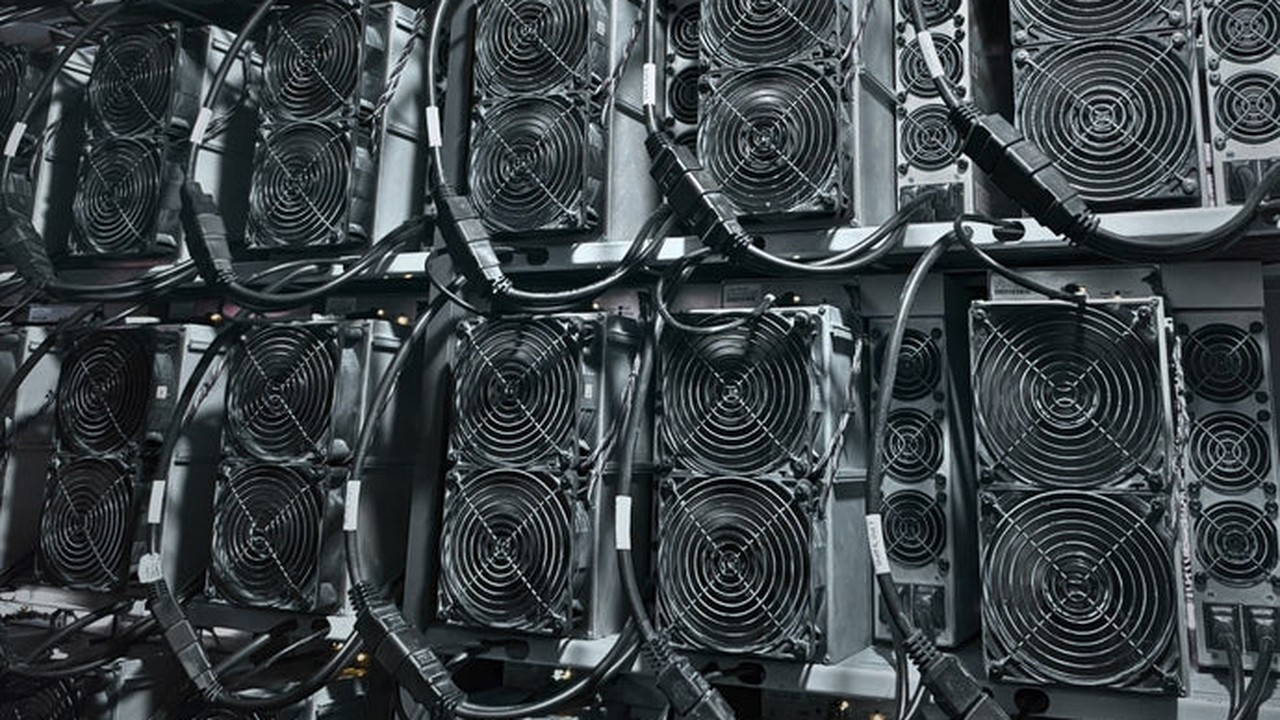
OneMiners exists to remove the industrial problem so that the provenance advantage is actually reachable for individual owners, not just for listed companies. You own the machine; the network runs it.
1. Coins that arrive from the protocol, not from a counterparty
Block rewards route from the pool to a wallet you control. Your source-of-funds pack — hardware invoice, hosting agreement, facility location, pool payout history — is generated as a by-product of normal operation. When an exchange or bank asks, you already have the answer on file.
2. Power priced for seven years, not seven days
Electricity is the entire margin in mining. The OneMiners network runs on long-term fixed rates rather than spot exposure, which is what makes a multi-year accumulation plan modellable in the first place.
3. A regulated-grade operating footprint
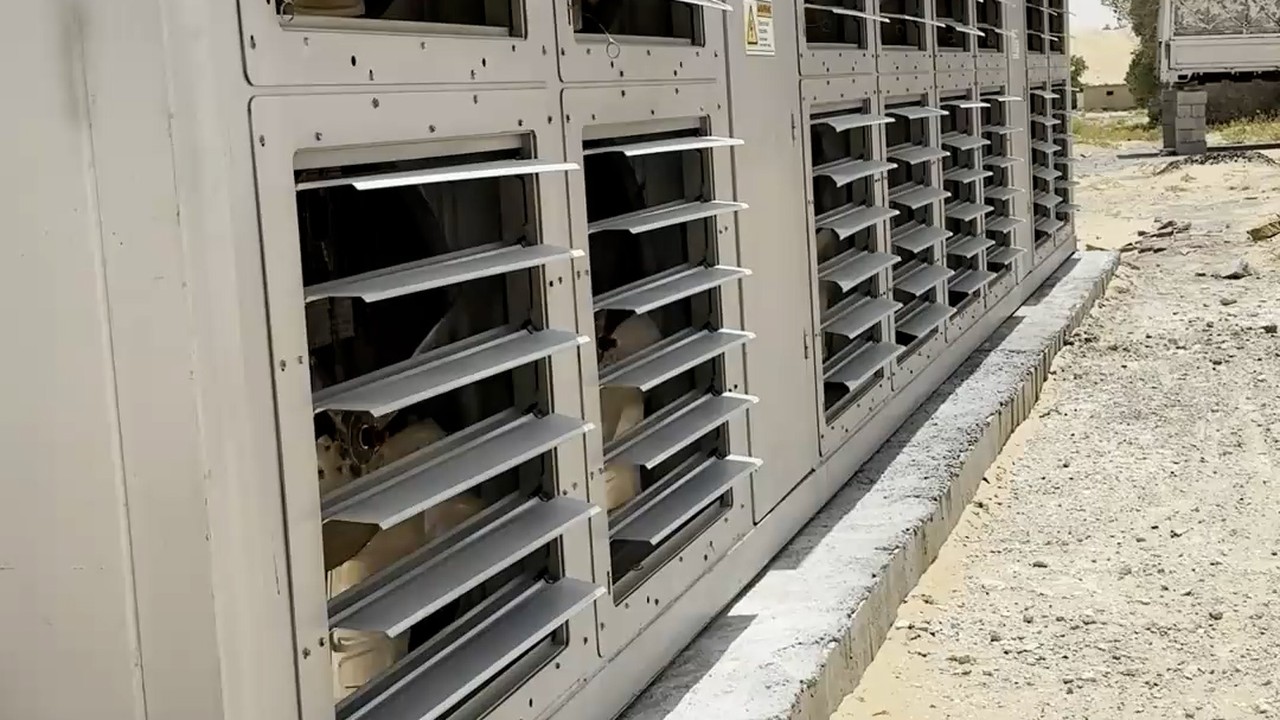
Provenance is not only about the ledger. It is also about being able to point at a real facility, in a named jurisdiction, with real infrastructure behind it. The OneMiners network spans 20 locations and 2,163 MW, at an average of roughly $0.048/kWh, with a 95%+ uptime SLA, a 7-year hardware warranty, insurance and full remote monitoring through the iOS and Android app. The full site map and per-location rates are published on the hosting centres page.
| Location | Capacity | 7-year fixed rate | Profile |
|---|---|---|---|
| Nigeria | 33 MW | $0.0360 | Lowest rate on the network; +250 MW expansion underway |
| Ethiopia | 40 MW | $0.0399 | Hydro and renewable powered |
| UAE — Dubai & Abu Dhabi | 34 MW | $0.0420 | Premium cooling and connectivity |
| Norway — Arctic | 36 MW | $0.0448 | Natural arctic cooling |
| USA — regional network | Multi-site | $0.0455 | New York, Georgia, South Carolina, Houston, Kansas, Texas |
| USA — flagship | 336 MW | $0.0553 | Industrial-scale flagship campus |
4. Hardware that is still economic in three years
A clean coin from an inefficient machine is still a losing trade. Efficiency — joules per terahash — determines whether your fleet survives the next difficulty cycle. The current ASIC line-up is built around the newest hydro and air-cooled generations, and the S23 series is where most new hosted deployments are landing. Financing, shipping, installation and the referral programme are all documented on the how it works page, and the mining calculators let you model a fleet against a specific rate before you commit a cent.
A Practical Provenance Checklist for Miners
Mining gives you a clean starting point. Keeping it clean is an operational discipline. This is the short version of what a competent compliance file looks like:
- Keep the paperwork from day one. Purchase invoice, serial numbers, hosting contract, facility address. Retroactive documentation is always harder.
- Export pool statements monthly. A continuous payout record tying hashrate to wallet is the single most persuasive document you can hand a compliance officer.
- Use dedicated receiving addresses. Do not commingle mined output with coins bought on the secondary market. Once mixed, the whole balance inherits the messier history.
- Never route mined coins through a mixer or privacy tool before an off-ramp. This is the fastest way to convert a clean asset into a flagged one, and the Bitfinex case is the reason why.
- Avoid peer-to-peer trades with unverified counterparties. A back-transfer from a tainted wallet can taint yours.
- Off-ramp through regulated venues. A boring, fully-KYC’d exchange or OTC desk is where clean provenance pays for itself.
- Report your income properly. Block rewards are typically income on receipt and a capital event on disposal. Speak to a qualified tax professional in your jurisdiction — clean coins and clean filings are the same project.
What Bitfinex Should Teach the Rest of Us
Lichtenstein and Morgan were not caught by a cryptographic breakthrough. They were caught by patience, by a permanent public record, and by a private-key file sitting in cloud storage. They spent close to six years and enormous ingenuity trying to solve a problem that mining simply does not have.
The uncomfortable mirror is this: most ordinary investors will never launder anything, and yet they still hold coins whose full history they cannot personally account for. That is not a moral failing. It is just what buying on the secondary market means. And as provenance scoring hardens into standard market plumbing, the gap between “coins I bought” and “coins I created” is going to keep widening.
Building durable digital capital does not require clever manoeuvres. It requires an efficient machine, cheap long-term power, and a coin whose entire history you can print on one page.
Frequently Asked Questions
1. Is Bitcoin actually fungible or not?
At the protocol level, completely. No node rejects a valid transaction based on a coin’s past. At the regulated-market level, imperfectly — exchanges and banks apply risk scores that treat coins differently depending on their transaction history. Both statements are true at the same time.
2. What is a "virgin" Bitcoin?
A coin issued as a block reward that has never been spent or transferred since creation. Its ledger history is a single coinbase transaction.
3. Do freshly mined coins really sell at a premium?
Some OTC desks and institutional buyers have reported paying above spot for coins with clear miner provenance, with commonly cited figures ranging from around 5–10% up to claims of 20%. These are negotiated, size-dependent and cyclical — not a published exchange price. Do not plan a budget around them.
4. Can mined Bitcoin ever be frozen?
Yes, if you subsequently send it somewhere problematic or receive tainted coins into the same wallet. Provenance protects the history you did not write. It cannot protect you from your own future transactions.
5. Does mining reduce my tax obligations?
No. In most jurisdictions block rewards are taxable income at receipt, and selling is a separate capital event. Mining makes your records easier to evidence; it does not make them smaller. Always consult a qualified tax professional locally.
6. How do I prove my Bitcoin came from mining?
A standard pack: hardware purchase invoice with serial numbers, the hosting agreement and facility details, pool payout statements over the relevant period, and the receiving addresses you control. Hosted miners can assemble all of this from their account records.
7. Are my coins tainted if I bought BTC on an exchange?
Almost certainly not. The overwhelming majority of secondary-market Bitcoin is entirely unremarkable. The point is not that bought coins are suspect — it is that their history is unknown to you, which occasionally creates friction you cannot anticipate or control.
8. Should I keep mined and purchased BTC in separate wallets?
Yes. Once you consolidate them in one address, the combined balance carries the mixed history. Separate receiving addresses cost nothing and preserve the cleaner narrative.
9. What happened to the Bitcoin recovered from the Bitfinex hack?
U.S. authorities seized roughly 94,000 BTC in February 2022 and a process to return value to Bitfinex and its stakeholders followed. Bitfinex had already compensated affected users after the 2016 breach through its own recovery token programme.
10. Why did the private keys end up in cloud storage?
Convenience. Managing thousands of addresses manually is impractical, so the keys were kept in an encrypted file in a cloud account. Investigators obtained and decrypted it. It is the clearest possible reminder that custody practice, not cryptography, is where crypto security usually fails.
11. Is hosting safer than mining at home for provenance purposes?
For documentation, yes — a hosting contract with a named facility is far stronger evidence than an unverifiable claim about a home garage. Home mining also runs into noise, heat and residential tariffs; specialist enclosures from pcpraha.cz help with the first two, but they cannot fix the electricity price.
12. What electricity rate do I actually need to make this work?
As a rule of thumb, modern hardware needs to be under roughly $0.06/kWh to remain comfortable through a difficulty cycle. The OneMiners network averages about $0.048/kWh across 20 sites, with Nigeria at $0.036 and Ethiopia at $0.0399 on seven-year fixed terms.
13. Can I host an ASIC I already own?
Yes. Existing hardware can be shipped into the network and brought under the same hosting, monitoring and support terms. The process is set out on the how it works page.
14. What if I want enterprise-scale deployment?
Multi-megawatt buyers are handled as dedicated deployments with their own commercial terms; large fleets are also served by specialists such as circlehash.com. For European retail purchasing and alternative hardware, kentino.com and IceRiver.eu are established names.
15. Is any of this an argument against holding Bitcoin you already bought?
No. It is an argument about how you add to a position going forward. Buying and mining are complementary; mining is simply the only route that produces coins with a history you authored yourself.
The Verdict
The Bitfinex story is a crime documentary on the surface and a compliance case study underneath. Two people held billions of dollars of Bitcoin and could not turn it into a life, because the ledger they stole from was the same ledger that convicted them.
The inverse of that story is the opportunity. Coins created by the protocol, on hardware you own, in a facility you can name, at a power price fixed for seven years, produce an asset whose entire history fits on a single page — and in a market that is learning to price provenance, that page is worth having.
Build your position on a foundation you can document. Start with the calculators, pick a site on the global network map, and see what a clean coin actually costs to make at OneMiners.
Resources
Sources & Further Reading
- Netflix — Biggest Heist Ever, directed by Chris Smith, released 6 December 2024.
- U.S. Department of Justice — announcements on the February 2022 seizure of approximately 94,000 BTC and the November 2024 sentencing of Ilya Lichtenstein and Heather Morgan.
- Reuters and CoinDesk — contemporaneous reporting on the 2016 Bitfinex breach and the 2024 sentencings.
- Chainalysis — published methodology on transaction clustering and address risk scoring.
- Bank for International Settlements — proposals on provenance-linked AML compliance scores for cryptoasset units.
- CoinMarketCap Academy and Tangem — reference definitions of "virgin Bitcoin" and reported premium ranges.
- Time — background reporting on the true story behind the Netflix documentary.