


You can technically mine Bitcoin on a phone or laptop, but at 2026 network levels it earns almost nothing. A real Bitcoin miner is the only route that adds up.
 By Michal Beno, CEO, OneMiners13 October 2026
Technically yes, economically no. Any computer can run Bitcoin's mining software. But the network now runs at about 970 EH/s, and a laptop at 100 MH/s would expect roughly 0.00000002 BTC a year, far less than its power bill. Apple and Google both ban apps that mine on the device itself. The route that adds up is an efficient ASIC Bitcoin miner on cheap electricity.
970 EH/s
Bitcoin network hashrate
Under 1 cent
what a laptop earns in a year
185M years
for a laptop to find a block solo
$63
price of a Bitaxe, the cheapest real miner
mempool.space, 5 October 2026; OneMiners calculation at 970 EH/s and 450 BTC per day; Apple App Store guidelines; OneMiners catalogue, 6 October 2026.
KEY TAKEAWAYS

Technically yes: any computer can make the guesses
Bitcoin mining is a guessing game. Computers repeatedly run a calculation called SHA-256 until one finds a result below a target number set by the network. The winner adds the next block of transactions and earns the block reward, currently 3.125 BTC. Any device that can run software can make these guesses, which is why the answer is technically yes.
In Bitcoin's early years, people really did mine on ordinary home computers. That changed when ASICs (application-specific integrated circuits) arrived. These chips do nothing but SHA-256, and they do it with extreme efficiency. Today almost all of Bitcoin's hashrate comes from ASIC Bitcoin miners, so a general-purpose processor is competing in a race it cannot realistically win.
The hashrate ladder: how big the gap really is
Hashrate is guesses per second. The units climb in steps of 1,000, which is where most confusion starts. Here is the ladder in plain words.
Hashrate units, from a phone to the whole network
Each step is 1,000 times the one before. Network hashrate: mempool.space, 5 October 2026.
A typical laptop processor or graphics chip manages SHA-256 in the MH/s range. A phone, built for battery life rather than raw maths, does less. A $229 Avalon Nano 3S, a small home ASIC, does about 6 TH/s. An industrial Bitcoin miner such as the Antminer S21 XP Hyd does about 473 TH/s.
Those numbers span more than a billion to one, so a normal bar chart would show one bar and four invisible ones. The chart below uses a log scale: every extra notch of bar length means ten times more hashrate.
The hashrate ladder (log scale)
Each notch of bar length = 10 times more guesses per second
Bar length = log10 of hashrate in MH/s. Phone and laptop rates are assumptions; device ratings from the OneMiners catalogue; network: mempool.space, 5 October 2026.
What each device would really earn in 2026
About 450 new bitcoin are created per day, shared in proportion to hashrate. So your expected share is simple division.
Expected Bitcoin per year (through a pool)
Your BTC per year = (your TH/s / network TH/s) x 164,250 BTC
Laptop: 0.0001 / 970,000,000 x 164,250 = about 0.00000002 BTC
S21 XP Hyd: 473 / 970,000,000 x 164,250 = about 0.08 BTC
Phone vs laptop vs real Bitcoin miners: what each can mine
Expected share of ~450 BTC/day at ~970 EH/s, before fees and power costs. Laptop assumes 100 MH/s. BTC $85,739, 5 Oct 2026.
Earnings are only half of the picture, because every device pays for its own electricity. A laptop under full mining load can draw 50 to 150 watts. At a typical American home rate of $0.17 per kWh, a 100 W load costs about $12 a month to earn a sum too small to see.
Revenue vs power bill per day at a $0.17 home rate
OneMiners calculation at $0.0398 per TH/s per day (5 October 2026), before pool fees. Power at a $0.17 per kWh American home rate.
None of the small devices cover their own power bill at American household prices, and even the industrial machine loses money at that rate. That is not a flaw in the hardware. It is what happens when power is expensive. Scale and electricity price, not the device you already own, decide whether mining pays.

Beware of Bitcoin mining apps on app stores
Search an app store for Bitcoin mining and you will find dozens of apps promising to mine for you. Here is the catch: neither store allows real on-device mining. Apple's App Store guidelines prohibit apps that mine cryptocurrency unless the processing happens off the device, and Google added a similar ban to its Play Store policy in July 2018. Any app that claims your phone itself is mining Bitcoin is either misleading you or breaking the rules.
Most of these apps are really one of two things. Some are cloud-mining schemes, where you pay a subscription or buy "hashpower" that you cannot verify exists. Others are ad farms, where a counter ticks up while you watch adverts, and withdrawals are capped or never arrive. In 2021, security firm Trend Micro reported fake cloud-mining apps on Google Play that charged users subscription fees for nothing in return, and Google removed eight of them.
Mining-app red flags, and what they really mean
Based on Apple App Store guidelines, Google Play policy (July 2018) and Trend Micro's 2021 report on fake cloud-mining apps.
A real mining service can show you exactly what you own: the Bitcoin miner model, where it runs, which pool it points at, and a payout history you can check on the blockchain.
Will mining harm a phone or laptop?
Real mining software runs the processor at full load around the clock. Phones and laptops are designed for short bursts, not that kind of sustained work. Continuous heat speeds up wear on lithium-ion batteries, which lose capacity faster when they stay hot, and it pushes fans, thermal paste and chips harder than their makers intended. You would trade part of the device's value for a reward measured in fractions of a cent.
Lottery mining: small Bitcoin miners as a hobby
There is one small-scale option that is genuinely fun: solo lottery mining with a tiny ASIC. Devices like the Bitaxe Gamma (about 1.2 TH/s, 17 W, around $63) and the Avalon Nano 3S (6 TH/s, 140 W, $229) can mine solo, meaning they try to win an entire block on their own. The chart shows how long each device would expect to wait for one block, again on a log scale.
Expected wait to find one block solo (log scale)
Shorter bar = shorter wait. Each notch = 10 times longer
OneMiners calculation: network TH/s / (device TH/s x 52,560 blocks per year) at 970 EH/s, 5 October 2026. Phone and laptop rates are assumptions.
At today's network level, a Nano 3S would expect a block about once in 3,076 years, and a Bitaxe about once in 15,379 years. But somebody does occasionally win. On 9 July 2026, a solo miner running a Bitaxe at about 1 TH/s found block 957,382 through Public Pool and collected the full reward of about 3.14 BTC, according to multiple industry reports. Stories like this are why hobby miners exist, but they are lottery tickets, not a plan. The Nano 3S has a practical bonus: it doubles as a small space heater.
The honest route: an ASIC Bitcoin miner on cheap power
If you want mining that can earn rather than just teach, the path is straightforward. A rule of thumb: daily revenue equals TH/s multiplied by 0.0398 at today's hashprice. The S21 XP Hyd at 473 TH/s earns about $18.83 per day before fees and draws about 5.68 kW. The chart shows how its daily power bill changes with the electricity price.
Antminer S21 XP Hyd: revenue vs daily power bill
Dollars per day, by electricity price
OneMiners calculation, 5,676 W, $0.0398 per TH/s per day, 5 October 2026, before pool fees. Not a forecast; hashprice changes daily.
Pick an efficient Bitcoin miner
Compare joules per terahash (J/TH). Lower means more Bitcoin per kWh.
Find cheap power first
Check your rate per kWh. At a typical home rate, even an industrial unit loses money.
Run the numbers
Use the mining calculator with today's price, difficulty and your power rate.
Host it professionally
A hosting facility provides industrial power, cooling, technicians and a pool connection.
Treat small devices as a hobby
A Bitaxe or Nano 3S is for learning and lottery fun, not income.
At $0.048 per kWh, the cheapest OneMiners hosting rate in Nigeria, the S21 XP Hyd's power costs about $6.54 per day, leaving about $12.29 per day before fees at today's numbers. That is why most serious newcomers skip the laptop entirely and host their Bitcoin miner in a professional facility, with a 7-year warranty on hosted miners covering defects, not normal wear.
 Bitaxe Gamma 1.2T$63Hashrate1.2 TH/sEfficiency14.20 J/THPower draw17 WBreak-even power$0.117/kWhNet/day at 4.80c$0.03View on OneMiners
 Avalon Nano 3S 6T$229Hashrate6 TH/sEfficiency23.30 J/THPower draw140 WBreak-even power$0.071/kWhNet/day at 4.80c$0.08View on OneMiners
 Antminer S21 XP Hyd 473T$6,199Hashrate473 TH/sEfficiency12.00 J/THPower draw5,676 WBreak-even power$0.138/kWhNet/day at 4.80c$12.29View on OneMiners
From hobby to hosted: live OneMiners prices, 6 October 2026. Net per day shown at $0.048 per kWh, at today's numbers, before pool fees.
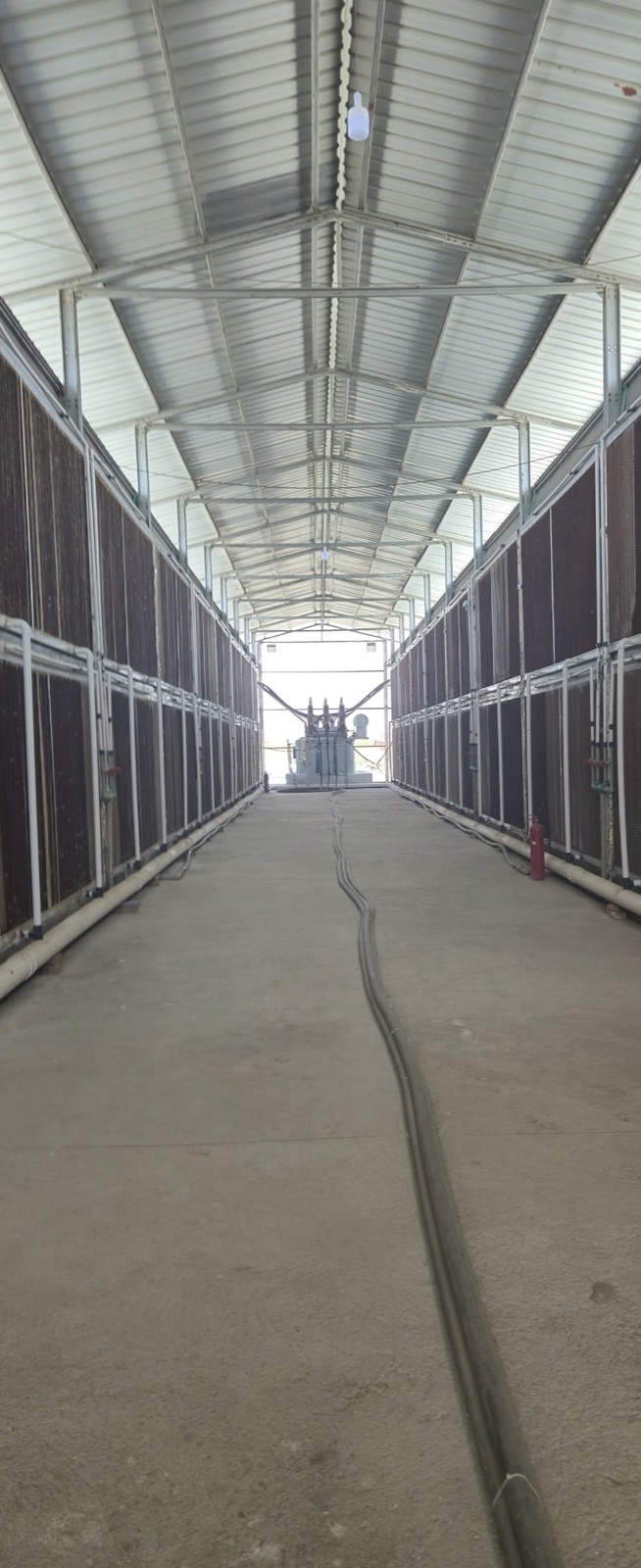

Ranked honestly: a hosted ASIC is the real route, a hobby ASIC is a fun lottery, and a phone or laptop is a science experiment. OneMiners hosting starts from $0.048 per kWh, and from $0.0364 on a 7-year prepaid contract. See how it works and the hosting locations.
Frequently asked questions
Can I mine Bitcoin on my phone?
Technically a phone can run mining code, but it would earn effectively nothing and heat up its battery. Apple and Google also ban apps that mine crypto on the device itself.
How much Bitcoin can a laptop mine in a year?
At about 100 MH/s, roughly 0.00000002 BTC per year at today's network level, which is far less than the electricity it uses.
Are Bitcoin mining apps legit?
Most are not mining on your phone at all. They tend to be cloud-mining subscriptions you cannot verify or ad-watching schemes with capped withdrawals, so treat them with caution.
What is the cheapest real Bitcoin miner?
Small hobby ASICs like the Bitaxe Gamma (around $63) and the Avalon Nano 3S ($229) are real Bitcoin miners, but they are best seen as lottery tickets and learning tools rather than earners.
What is the best way for a beginner to mine Bitcoin?
Buy an efficient ASIC Bitcoin miner and run it on low-cost electricity, which for most people means hosting it in a professional facility.
Skip the phone apps: browse efficient Bitcoin miners and hosting from $0.048 per kWh.
Browse Bitcoin minersOpen the mining calculatorSOURCES AND DATA
- Network hashrate and difficulty: mempool.space and blockchain.info, 5 October 2026; BTC price: CoinGecko, 5 October 2026
- Apple App Store Review Guidelines (on-device mining prohibited); Google Play policy update, July 2018
- Trend Micro report on fake cloud-mining apps on Google Play, 2021
- Solo Bitaxe block 957,382, 9 July 2026: multiple industry reports
- Device specs and prices: OneMiners catalogue, 5 to 6 October 2026
- Expected-BTC and solo-odds figures: OneMiners calculation; phone (0.5 MH/s) and laptop (100 MH/s) hashrates are assumptions
- Hosting rates: published OneMiners location pages
Michal Beno
CEO of OneMiners, the global Bitcoin mining hosting and hardware platform with 15 published hosting locations, 7-year fixed electricity contracts and a 7-year hardware warranty. He writes about the economics of industrial Bitcoin mining.
Informational only, not financial advice. Figures are a snapshot from public market data and news reports as of 5 October 2026 and can change quickly. Crypto prices can fall as well as rise. No return is offered or implied. Do your own research.


