


Antminer S23 vs Antminer Z15 Pro
If you've searched "Antminer S23 vs Z15 Pro," you've probably seen the two big numbers side by side: 318 TH/s versus 860 KH/s. And you've probably assumed the S23 must be the monster and the Z15 Pro the little one.
Here's what most comparison pages get wrong: those two numbers measure completely different jobs. Ranking them against each other is like comparing a truck's tow rating to a blender's RPM. Both are real. Neither tells you which one to buy.
So let's do it the way an actual miner would explain it to a friend about to spend real money — line up the stuff that matters, and be honest about what nobody can promise.
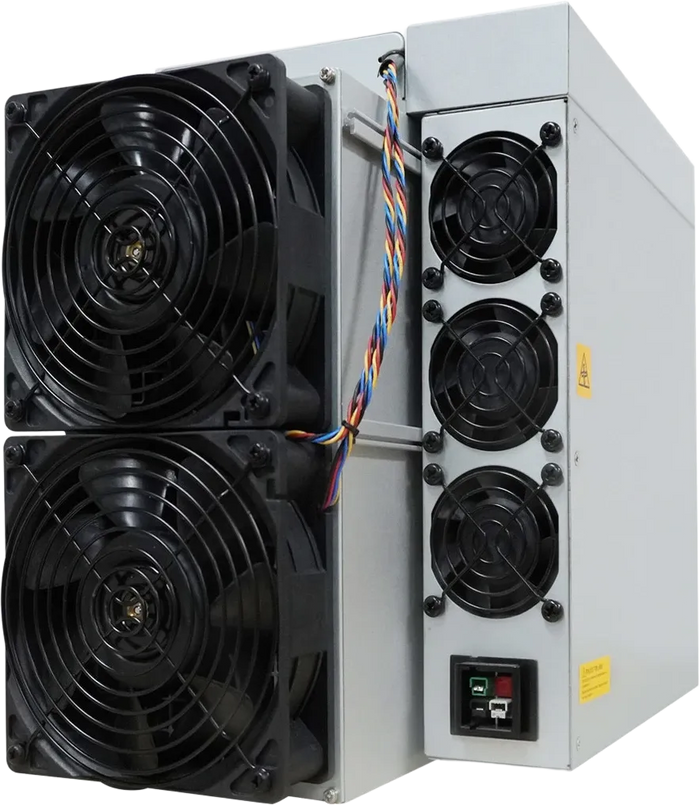
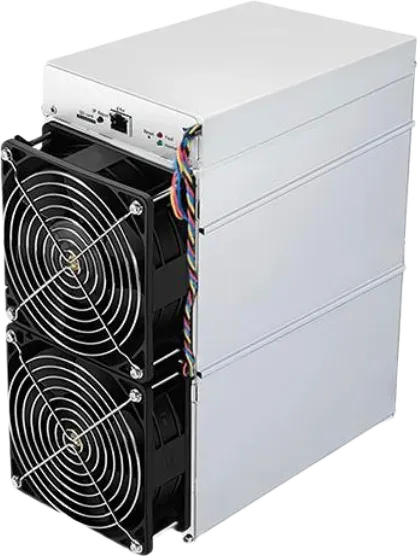
Hashrate
Not comparable
318 TH/s and 860 KH/s measure different algorithms — no fair "winner" here.
Lower power draw
Z15 Pro
~2,849 W vs ~3,498 W for the S23.
Higher est. net daily
Z15 Pro
~$26.24/day vs ~$5.23/day — third-party snapshot only.
Assumed power rate
$0.060/kWh
Change this and the whole profit picture changes.
Option 1
Antminer S23 (318 TH/s)
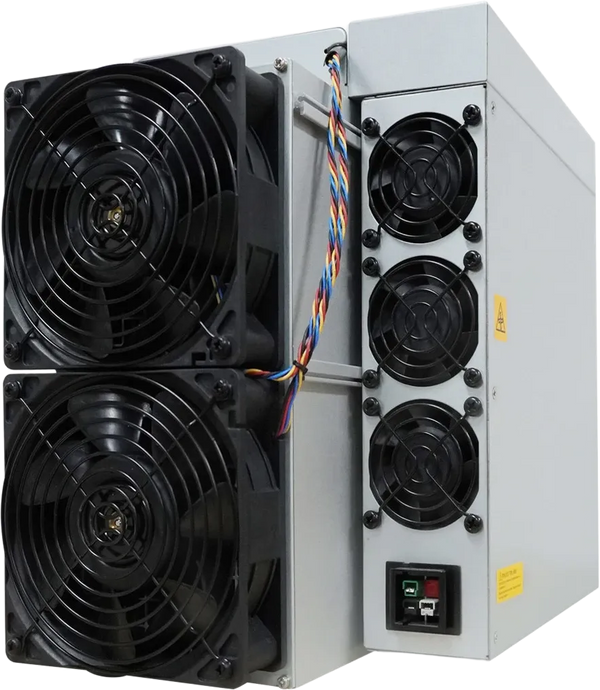
Price
$6,899
Payback*
~3.6 yrs
Hashrate
318 TH/s
Net daily*
$5.23
Option 2
Antminer Z15 Pro (860 KH/s)
Price
$7,350
Payback*
~9 mo
Hashrate
860 KH/s
Net daily*
$26.24
There's no single winner — it depends on your bet
The Z15 Pro looks stronger in this snapshot: lower power draw and a higher estimated daily net. But it's a bet on Zcash, whose price swings hard. The S23 is a bet on Bitcoin — the deepest, most durable network in mining. Two different bets, not two grades of the same machine.
Antminer S23
Best for SHA-256 / Bitcoin exposure & the long game
Antminer Z15 Pro
Best for Equihash / Zcash exposure & stronger current snapshot economics
Quick answer: The S23 and Z15 Pro aren't rivals — they mine different coins on different algorithms. The Antminer S23 is a SHA-256 machine for Bitcoin. The Antminer Z15 Pro is an Equihash machine for Zcash and similar coins. The real decision isn't "which makes more today?" — it's which coin you want, what you pay for the machine, and what electricity rate you can get.
318 TH/s vs 860 KH/s: why you can't compare these numbers
This is the most important part of the article, so let's keep it dead simple.
A miner solves a specific type of math puzzle. The "algorithm" is just the kind of puzzle. Hashrate is how many guesses per second it makes at that puzzle.
The S23 solves SHA-256 puzzles — Bitcoin's algorithm — measured in terahashes per second (TH/s), trillions of guesses. The Z15 Pro solves Equihash puzzles — Zcash's algorithm — measured in kilosolutions per second (KH/s), thousands of solutions.
Different puzzle. Different unit. So 318 trillion of one thing is not "bigger" than 860 thousand of a completely different thing.
A simple analogy
Picture two vending machines. One counts bottles sold per hour; the other counts sandwiches. If the bottle machine reads 318 and the sandwich machine reads 860, you'd never call the sandwich machine "more powerful." Different products, different scales. Bitcoin hashrate and Equihash hashrate are exactly that.
The only fair way to judge speed is within the same algorithm — S23 against other Bitcoin miners, Z15 Pro against other Zcash miners. Never across the line.
Antminer S23 vs Z15 Pro: quick comparison
S23 figures are Bitmain's announced numbers; Z15 Pro figures are the widely-cited manufacturer/retail specs. Profitability is a third-party snapshot at $0.06/kWh.
| Spec | Antminer S23 (air) | Antminer Z15 Pro |
|---|---|---|
| Algorithm | SHA-256 | Equihash (200,9) |
| Main coins | Bitcoin (BTC), Bitcoin Cash (BCH) | Zcash (ZEC), Horizen (ZEN), Komodo (KMD) |
| Hashrate | 318 TH/s | ~840–860 KH/s (batch dependent) |
| Power draw | ~3,498 W | ~2,780 W (840); ~2,849 W (860) |
| Efficiency (own algorithm) | 11 J/TH | ~3.31 J/KSol |
| Cooling | Air | Air |
| Electricity / day | ~84.0 kWh | ~66.7 kWh |
| Electricity / month | ~2,519 kWh | ~2,002 kWh |
| Est. net profit ($0.06/kWh, snapshot) | ~$5.23/day (~$157/mo) | ~$26.24/day (~$787/mo) |
| Dimensions | 410 × 209 × 170 mm | 245 × 290 × 132 mm |
| Price at OneMiners (Aug 2026) | $6,899 | $7,350 |
What can the Antminer S23 mine?
The S23 runs SHA-256, so it mines Bitcoin (BTC) first and foremost, plus technically Bitcoin Cash (BCH) and other SHA-256 forks. Almost everyone points a machine like this at Bitcoin through a pool — you're mining the asset with the deepest market and most infrastructure behind it.
Bitmain announced the air-cooled S23 at 11 J/TH — a real efficiency step for an air miner. These are manufacturer spec-sheet figures, though; units only began shipping in 2026, so long independent field data is still thin.
What can the Antminer Z15 Pro mine?
The Z15 Pro runs Equihash (200,9). Its headline coin is Zcash (ZEC), and it can also mine other Equihash coins like Horizen (ZEN) and Komodo (KMD). It cannot mine Bitcoin.
Antminer S23 vs Z15 Pro: power consumption
Here's a round the Z15 Pro clearly wins: it uses less electricity.
- Antminer S23: ~3,498 W → ~84.0 kWh/day, ~2,519 kWh/month, ~30,642 kWh/year.
- Antminer Z15 Pro: ~2,780 W → ~66.7 kWh/day, ~2,002 kWh/month, ~24,353 kWh/year.
(30-day month. The OneMiners-stocked 860 unit is rated ~2,849 W, so nudge its numbers up slightly.) Over a year the S23 pulls roughly 6,000 kWh more — how much that matters depends entirely on your rate per kWh.
Electricity cost comparison
This is the table to screenshot: same machines, five rates, showing what you'd pay just to keep them running.
Daily electricity cost
| Rate ($/kWh) | S23 (~84.0 kWh/day) | Z15 Pro (~66.7 kWh/day) |
|---|---|---|
| $0.04 | $3.36 | $2.67 |
| $0.05 | $4.20 | $3.34 |
| $0.06 | $5.04 | $4.00 |
| $0.08 | $6.72 | $5.34 |
| $0.10 | $8.40 | $6.67 |
Monthly electricity cost (30 days)
| Rate ($/kWh) | Antminer S23 | Antminer Z15 Pro |
|---|---|---|
| $0.04 | $100.80 | $80.06 |
| $0.05 | $126.00 | $100.08 |
| $0.06 | $151.20 | $120.10 |
| $0.08 | $201.60 | $160.13 |
| $0.10 | $252.00 | $200.16 |
Look at the spread. An S23 costs about $100/month at 4¢ but $252/month at 10¢ — same machine, two-and-a-half times the bill, straight out of your profit.
That's why the electricity rate you get is almost as important as the miner you buy. A great machine on expensive home power can lose money while an ordinary one on cheap hosted power quietly prints. It's also why running these at home rarely works — home power is usually too expensive, and these are loud, hot, industrial machines.
To see what rate you could realistically get, check OneMiners hosting locations, where each site lists its electricity rate — starting around 3.6¢/kWh at the lowest-cost facilities. Plug that into the table above and watch the picture change versus paying 10¢ at home.
Antminer S23 vs Z15 Pro: profitability
The number everyone came for — with the honesty it deserves. A common third-party snapshot at $0.06/kWh showed roughly:
- Antminer S23: ~$5.23/day net (~$157/month)
- Antminer Z15 Pro: ~$26.24/day net (~$787/month)
Working backwards (net + the $0.06 electricity cost), the S23's implied gross was ~$10/day and the Z15 Pro's ~$30/day before pool fees. Useful context — but don't multiply either by 365 and call it yearly income. That's the biggest mistake new buyers make.
What moves those daily numbers, often within a week:
- Coin price — the biggest lever, especially ZEC for the Z15 Pro.
- Network difficulty — more miners join, your slice shrinks.
- Block rewards — Bitcoin's halves roughly every four years.
- Transaction fees — can boost Bitcoin revenue in busy periods.
- Electricity rate — see the table above.
- Pool fees — small but constant.
- Uptime — an offline machine earns exactly nothing.
S23 vs Z15 Pro ROI
A machine earning more per day does not automatically have better ROI. ROI is a three-way equation: purchase price + running cost + uptime.
Here the two prices are close ($6,899 vs $7,350), so under the snapshot the Z15 Pro's higher daily net gives it a much shorter illustrative payback — on the order of ~9 months versus ~3.6 years for the S23. But read that carefully: it leans entirely on ZEC holding up, and Zcash economics move fast. The S23's slower payback rides on Bitcoin, a far steadier network. Shorter payback on paper isn't the same as the safer long-term bet.
A truly responsible ROI needs three current inputs: what you'll pay for the machine, the power/hosting rate you can actually get, and a sober view of the coin. Pull live figures rather than trusting an old screenshot — compare current ASIC miner pricing against real hosting rates and run your own math.
Which one would we choose?
If a friend asked us straight up:
Other Antminer S23 models worth comparing
The air-cooled S23 is just the entry point. Bitmain built the S23 as a family with different cooling and output — all SHA-256. Prices below are OneMiners-listed (Aug 2026); power figures derive from announced hashrate × efficiency and vary by batch.
| Model | Hashrate | Efficiency | ~Power | Cooling | Price (Aug 2026) |
|---|---|---|---|---|---|
| Antminer S23 (air) | 318 TH/s | 11 J/TH | ~3,498 W | Air | $6,899 |
| Antminer S23 Immersion | ~442 TH/s | 11 J/TH | ~4,400 W | Immersion | $10,289 |
| Antminer S23 Hyd | 580 TH/s | 9.5 J/TH | ~5,510 W | Hydro | $12,299 |
| Antminer S23 Hyd 3U | 1,160 TH/s (1.16 PH/s) | 9.5 J/TH | ~11,020 W | Hydro | $28,399 |
See which variants are in stock on the Antminer S23 series page — new-release pricing moves quickly, so check the live listing.
Other Antminer Z15 models worth comparing
The Z15 Pro has relatives too. If Equihash is your thing, know the family.
| Model | Hashrate | ~Power | ~Efficiency | Notes |
|---|---|---|---|---|
| Antminer Z15 (original) | 420 KH/s | 1,510 W | ~3.6 J/KSol | The 2020 original; mostly secondary-market now |
| Antminer Z15 Pro (840 batch) | 840 KH/s | 2,780 W | ~3.31 J/KSol | Standard binning cited by Bitmain & most trackers |
| Antminer Z15 Pro (860 batch) | 860 KH/s | ~2,849 W | ~3.31 J/KSol | Higher-binned/newer batch (the one OneMiners stocks) |
Is the Z15 Pro 840 KH/s or 860 KH/s?
Both — and neither is a typo. Bitmain's store and most trackers list the standard Z15 Pro at 840 KH/s @ 2,780 W. A higher-binned batch sells at 860 KH/s, drawing a bit more power (~2,849 W) at roughly the same ~3.31 J/KSol efficiency. Same machine, factory-tuned a touch higher — not two products. Just check the exact spec on the listing so you know which batch you're getting. (OneMiners stocks the 860 version.)
Where to buy and host an S23 or Z15 Pro
Once you've picked a machine, two practical problems remain: getting a real unit at a real price, and finding power cheap enough to make it worth running. Those shape your outcome more than the spec sheet. In one place, OneMiners lets you:
- Check pricing and availability across current ASIC miners, including the Antminer S23 ($6,899) and Antminer Z15 Pro ($7,350) — prices seen Aug 2026.
- Compare hosting locations and electricity rates across ~15 global facilities before committing.
- Deploy straight into professional hosting and skip the power, cooling and noise headaches — handy for hydro and immersion models.
- Monitor hosted equipment remotely from the OneMiners app (hashrate, rewards, temps, fans).
- Get maintenance and support through the support and warranty resources.
- Spread the cost with payment/financing options.
If you like to see real buyer experience first, OneMiners holds a 4.3 / 5 rating from 90 reviews on Trustpilot (checked Aug 2026). Ratings change, so glance at the current score and read a few recent reviews yourself — a better read on real purchasing and hosting experience than any single testimonial.
FAQ
- Is the Antminer S23 better than the Z15 Pro?
- Neither is universally "better" — they mine different coins on different algorithms. The S23 is for Bitcoin; the Z15 Pro is for Zcash and other Equihash coins. It depends on which coin you want, your electricity rate, and what you pay for the machine.
- Which is more profitable, S23 or Z15 Pro?
- In a third-party snapshot at $0.06/kWh, the Z15 Pro showed a higher daily net (~$26.24 vs ~$5.23). But that's a moment in time — Equihash profit swings hard with the Zcash price and can turn negative at higher power rates. Always recheck with current coin prices and your real electricity rate.
- Why does the S23 use TH/s while the Z15 Pro uses KH/s?
- They solve different puzzles. The S23 runs SHA-256 (trillions of hashes — TH/s); the Z15 Pro runs Equihash (thousands of solutions — KH/s). Different algorithm, different unit — which is why you can't compare the two numbers directly.
- Can the S23 mine Bitcoin?
- Yes. It's a SHA-256 machine and Bitcoin is the main SHA-256 coin. It can technically mine other SHA-256 coins like Bitcoin Cash too, but most people point it at Bitcoin through a pool.
- What does the Z15 Pro mine?
- Equihash (200,9) coins — primarily Zcash (ZEC), plus coins like Horizen (ZEN) and Komodo (KMD). It cannot mine Bitcoin.
- How much electricity does an S23 use?
- About 3,498 W — roughly 84 kWh/day, ~2,519 kWh/month, or ~30,642 kWh/year running 24/7. Your cost depends on your rate per kWh (see the table above).
- How much electricity does a Z15 Pro use?
- About 2,780 W (840 batch) — roughly 66.7 kWh/day, ~2,002 kWh/month, ~24,353 kWh/year. The 860 batch draws slightly more (~2,849 W).
- Which miner has the better ROI?
- You can't tell from daily profit alone — ROI depends on purchase price, running/hosting cost and uptime together. Under the current snapshot the Z15 Pro's payback looks shorter, but that rests on ZEC holding up. Pull current hardware and hosting prices before calculating.
- Where can I host an S23 or Z15 Pro?
- Both are loud, hot, industrial machines that are hard to run at home, where power is usually too expensive to profit. Professional hosting facilities offer cheaper power, cooling and uptime — you can compare locations and rates through OneMiners.
- Is ASIC mining still profitable?
- It can be, but only when the numbers line up: a reasonable hardware price, cheap electricity, decent uptime and a cooperative coin price. It's never guaranteed and changes constantly, so run the current numbers yourself rather than trusting an old screenshot.
The bottom line
Don't pick an ASIC from a hashrate number or today's profit screenshot — the two most misleading figures in mining. The S23's 318 TH/s and the Z15 Pro's 860 KH/s aren't even measuring the same thing, and today's profit can look completely different next month.
What decides your result is the boring stuff: the price you pay, the electricity rate you get, whether it stays online, and which coin you believe in. Sort those out together and the right miner for you becomes obvious.
So before you commit, check the current machine price and the real hosting rates side by side — compare live ASIC miner pricing and hosting options and electricity rates at OneMiners, then run your own math. That one habit saves more money than picking the "bigger number."
For general information only — not financial or investment advice. Mining profitability, specifications, prices and availability change constantly and vary by source. Figures include manufacturer spec-sheet numbers, third-party estimates and company-reported information, current as of August 2026 — verify all specs, prices and rates before purchasing. Cryptocurrency mining carries risk, including the risk of loss. *In-stock status, prices and payback estimates were accurate when checked (Aug 2026) and will change.


