


A Bitcoin miner is, physically, an electric heater that also secures the Bitcoin network. Here is how that heat is already warming towns, greenhouses and pools, and where the idea runs out.
 By Michal Beno, CEO, OneMiners28 October 2026
Almost all the electricity a Bitcoin miner uses ends up as heat, just as it would in an electric heater. An Antminer S21 Pro drawing 3,675 W puts out about 12,539 BTU per hour, roughly the heat of two and a half household space heaters. That heat is already being reused: MARA feeds it into district heating networks in Finland, a city utility in North Vancouver uses it to warm buildings, and Dutch growers have used it in greenhouses. The catch is that the heat is low-temperature and mostly needed in winter.
12,539
BTU per hour from one S21 Pro
88.2 kWh
heat per day, same miner
3.5 MW
heat from MARA's Satakunta site
20 to 50 C
hydro coolant inlet range (S21 Hyd)
Antminer S21 Pro rating, OneMiners catalogue, 6 October 2026; MARA, 30 July 2025; Bitmain S21 Hyd specification.
KEY TAKEAWAYS

Why a Bitcoin miner is really a heater
A Bitcoin miner is a box of specialised chips called ASICs (application-specific integrated circuits) that do one job: computing SHA-256 hashes, trillions of guesses per second, in the race to find the next block. Doing that work moves electrons through billions of tiny transistors, and the energy has nowhere to go but heat. A miner does not store energy, lift anything or emit light worth mentioning. So, by the law of conservation of energy, the electricity that goes in comes out as heat, through the fans as warm air or through the coolant as warm water.
That is exactly what an electric space heater does, with one difference: the heater only makes heat, while the Bitcoin miner makes the same heat and also does useful work for the Bitcoin network, earning Bitcoin in the process. That is why heat reuse appeals to engineers. If you need the heat anyway, the mining comes almost free.
Watts in = heat out
Heat (BTU per hour) = power (W) x 3.412
Heat per day (kWh) = power (W) x 24 / 1,000
Antminer S21 Pro: 3,675 W x 3.412 = about 12,539 BTU/h, or 88.2 kWh of heat per day
A BTU (British thermal unit) is the heat needed to warm one pound of water by one degree Fahrenheit; heaters and air conditioners are often rated in BTU per hour. A common portable electric heater draws about 1,500 W, or about 5,118 BTU/h. One S21 Pro therefore heats like about 2.5 of those heaters running flat out, all day, every day.
Heat output by device
BTU per hour at rated power
OneMiners calculation: watts x 3.412. Ratings: OneMiners catalogue, 6 October 2026; Avalon Mini 3 at 800 W per Canaan (CES, January 2025); 1,500 W heater shown for scale.
From watts to heat: popular Bitcoin miners
 Avalon Nano 3S 6T
OneMiners calculation from rated power, OneMiners catalogue, 6 October 2026. Real draw varies a few percent with firmware and temperature.
Real heat reuse projects, verified
Heat reuse is not just a whiteboard idea. These projects have been reported by the companies involved or by major news outlets.
Bitcoin mining heat reuse in practice
Sources: MARA, 30 July 2025; Bitcoin Magazine, June 2024; International District Energy Association, 10 March 2022; AFP via Euronews, 12 December 2022; Fortune, 21 December 2023; Cointelegraph, 11 February 2022.
District heating in Finland
District heating means one central plant heats water and pumps it through insulated underground pipes to many buildings. It is common in Nordic countries. MARA launched a pilot in the Satakunta region of Finland in June 2024. In a July 2025 update, MARA said the Satakunta site supplies about 3.5 MW of heat at 55 to 78 C, and a second site in Seinajoki provides about 1 MW from miners plus 0.25 MW from heat pumps at 50 to 60 C. MARA says both were connected to existing networks in under 30 days and that, in Seinajoki, the heat replaced peat, oil and wood.
City heating in North Vancouver
In March 2022, North Vancouver's city-owned utility, Lonsdale Energy Corporation, partnered with MintGreen to add Bitcoin mining heat to its hydronic district energy system, which serves about 100 residential and commercial buildings. MintGreen said its "Digital Boilers" recover more than 96% of the electricity used as usable heat, running mainly on BC Hydro's hydropower.
Greenhouses, pools and drying
In December 2022, AFP reported on a Dutch tulip grower whose greenhouse was heated by six Bitcoin miners run by a firm called Bitcoin Brabant, powered partly by rooftop solar, as gas prices soared. In Brooklyn, the Bathhouse spa submerges miners in a cooling fluid and uses a heat exchanger to warm its pools, as Fortune reported in December 2023. In Norway, Kryptovault used warm exhaust air from its hydro-powered site in Honefoss to dry timber logs, Cointelegraph reported in February 2022.

Air vs hydro: why water makes reuse easier
How useful heat is depends on its temperature, not just its amount. Engineers call warm air or lukewarm water low-grade heat: there is a lot of it, but it is hard to move and too cool for many jobs. An air-cooled miner blows out warm air, fine for a garage or a drying room but hard to pipe across a town.
A hydro-cooled (water-cooled) Bitcoin miner pumps liquid through cold plates on the chips. Bitmain's specification for the Antminer S21 Hyd allows coolant to enter at 20 to 50 C at 8 to 10 litres a minute. At its rated 5,360 W and 8 litres a minute, the water warms by about 10 C on the way through, so a miner fed at 50 C returns water near 60 C. That is hot enough for many heating systems.
How hot does the heat need to be?
Water temperature in degrees Celsius
Sources: U.S. CPSC hot tub guidance (104 F); MARA, 30 July 2025; OneMiners calculation from the Bitmain S21 Hyd specification (5,360 W, 8 L/min, water heat capacity 4,186 J/kg per C), 6 October 2026.
Air-cooled vs hydro-cooled for heat reuse
General comparison. Coolant range: Bitmain Antminer S21 Hyd specification. MARA's Finnish sites use liquid cooling (MARA, 30 July 2025).
Miner heats the coolant
Water or a water-glycol mix flows over the chips and leaves the miner several degrees hotter.
Heat exchanger
The coolant passes through a heat exchanger, a stack of thin plates that moves heat into a separate water loop without mixing them.
Boost if needed
If the network needs hotter water, a heat pump can lift the temperature further, as at MARA's Seinajoki site.
Into the network
The heated water flows into the district heating pipes, or a pool or greenhouse loop, and the cooled water returns to the miners.
Dump the rest
On warm days, when nobody needs the heat, dry coolers or cooling towers release it to the air instead.
The economics, and the limits
Start with the miner. At today's numbers, an Antminer S21 Pro (245 TH/s) earns about $9.75 a day in Bitcoin before pool fees, at a hashprice of $0.0398 per TH per day. Its power at $0.048 per kWh costs about $4.23 a day. Now suppose the owner sells or uses the 88.2 kWh of heat. Every kWh that replaces a gas boiler or an electric heater is value on top of the mining revenue.
Electricity needed to make 88.2 kWh of heat
kWh of electricity per day, and what else you get
OneMiners calculation, 6 October 2026, for one Antminer S21 Pro (3,675 W). COP = heat out per unit of electricity; the IEA (The Future of Heat Pumps, November 2022) puts modern heat pumps at 3 to 5 times more efficient than gas boilers.
That last bar is the honest limit. A miner beats a plain electric heater easily, because it makes the same heat and earns Bitcoin too. But a heat pump moves heat from outside air or the ground and delivers several units of heat per unit of electricity, so in pure heating terms it wins. Heat reuse works best where a building or network needs a steady base of warm water and a miner is already running there.
Seasonality. A miner makes the same heat in July as in January, but most heating demand comes in winter. In summer, the heat has to be dumped.
Low-grade heat. Even hydro miners top out around 60 C, lower than some older district heating networks, so a heat pump boost may be needed.
Location. Heat travels badly. Miners must sit next to the user, and the cheapest power is often far from any town.
How this relates to hosting in cold, hydro-powered places
Large mining sites face the mirror image of the heating problem: they must get rid of heat cheaply. That is one reason miners cluster in cold places with cheap hydropower, such as the Nordics and Canada. Cold air does a lot of the cooling for free, which lowers the energy spent on fans and chillers and helps machines run steadily. In most of these sites, the heat is simply released to the air, because there is no town next door to buy it.
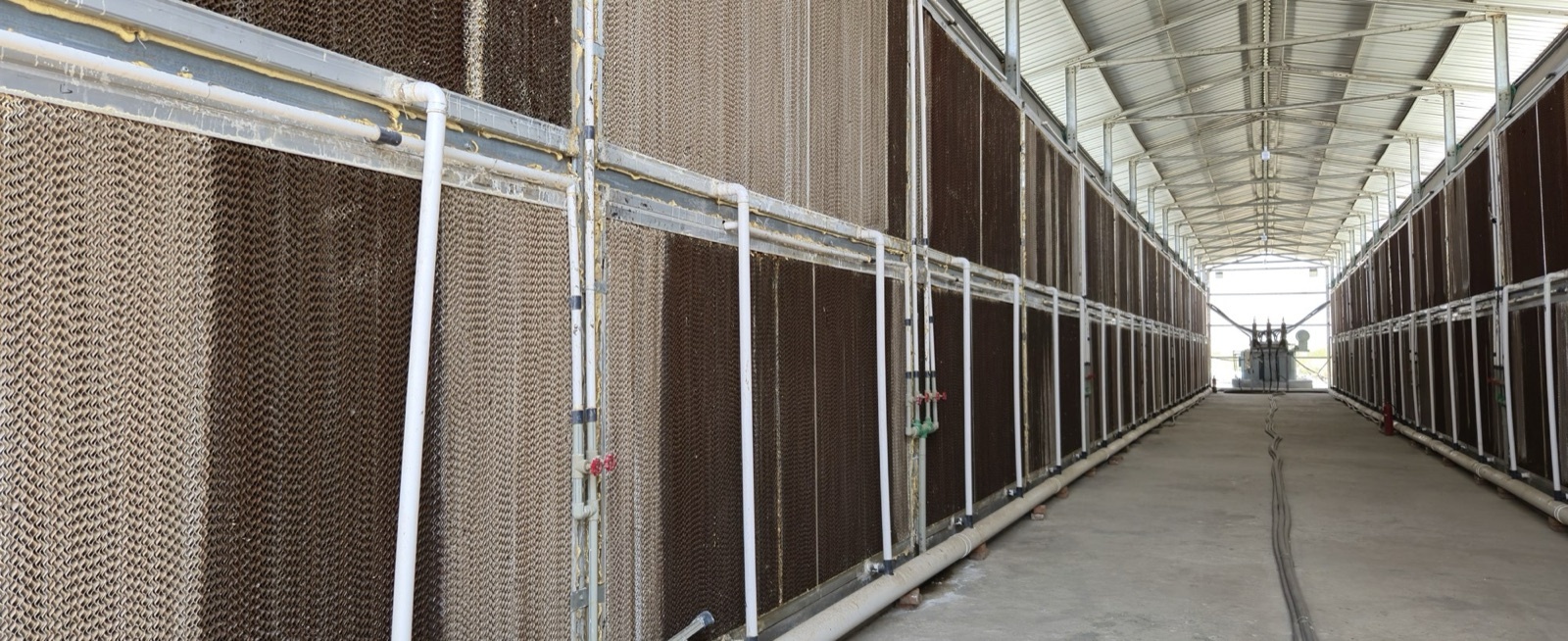
OneMiners hosting locations include Norway (100% hydro) and Canada (hydro), alongside warm-climate sites such as Ethiopia, where evaporative cooling walls handle the heat. For a hosted miner, the practical benefits of a cool, hydro-powered site are stable temperatures, clean power and a low electricity rate. Hosting starts from $0.048 per kWh, and from $0.0364 on a 7-year prepaid contract, and hosted miners carry a 7-year warranty that covers defects, not normal wear.
 Antminer S21 Pro 245T$2,299Hashrate245 TH/sEfficiency15.00 J/THPower draw3,675 WBreak-even power$0.111/kWhNet/day at 4.80c$5.52View on OneMiners
 Antminer S21+ Hyd 395T$2,499Hashrate395 TH/sEfficiency15.00 J/THPower draw5,925 WBreak-even power$0.111/kWhNet/day at 4.80c$8.90View on OneMiners
 Antminer S23 Hyd 580T$12,299Hashrate580 TH/sEfficiency9.50 J/THPower draw5,510 WBreak-even power$0.175/kWhNet/day at 4.80c$16.74View on OneMiners
Bitcoin miners from the OneMiners catalogue: one air-cooled, two hydro-cooled. Live prices 6 October 2026; net per day at $0.048 per kWh, at today's numbers, before pool fees.

Heat reuse is real physics and a real business in the right place: a cold town, a district heating network and hydro-cooled miners next door. For most miners, the bigger lever is the electricity rate and the efficiency of the machine, not selling the heat. That is why OneMiners focuses on cheap, often hydro-powered hosting and efficient Bitcoin miners. Run your numbers in the mining calculator and compare sites on the hosting centers page.
Frequently asked questions
Does a Bitcoin miner really turn all its electricity into heat?
Very nearly. A miner stores no energy and does no mechanical work, so the electricity it uses ends up as heat in the air or the coolant.
How much heat does an Antminer S21 Pro make?
At 3,675 W, about 12,539 BTU per hour, or 88.2 kWh of heat per day.
Can a Bitcoin miner heat my house?
A miner can heat a room or a well-insulated space, but large machines are loud and draw a lot of power. Small home units exist for this purpose, with much lower hashrate.
Is Bitcoin mining used for district heating?
Yes. MARA supplies heat to district heating networks in Satakunta and Seinajoki, Finland, and Lonsdale Energy in North Vancouver added mining heat to its network in 2022.
Why are hydro-cooled miners better for heat reuse?
They deliver heat as hot water, which is easy to pipe. Bitmain's S21 Hyd accepts coolant at up to 50 C, so the water leaving it can be hot enough for heating systems.
Is a miner better than a heat pump for heating?
Not for heat alone. A heat pump delivers several units of heat per unit of electricity. A miner makes one unit of heat per unit of electricity, but also earns Bitcoin.
Put your Bitcoin miner where power is cheap and cooling is easy.
See hosting locationsBrowse Bitcoin minersSOURCES AND DATA
- MARA, Beyond the blockchain: how Bitcoin mining powers clean, low-cost district heating, 30 July 2025 (Satakunta 3.5 MW at 55 to 78 C; Seinajoki 1 MW plus 0.25 MW heat pumps at 50 to 60 C)
- Bitcoin Magazine, Marathon uses Bitcoin mining to heat town of 11,000 in Finland, June 2024 (pilot launch)
- International District Energy Association, This Canadian city will be heated by Bitcoin mining, 10 March 2022 (MintGreen and Lonsdale Energy)
- AFP via Euronews, A Bitcoin miner and tulip grower team up to reduce costs, 12 December 2022
- Fortune, Bathhouse NYC Bitcoin mining pools, 21 December 2023
- Cointelegraph, Sustainable Bitcoin miner uses waste heat to dry wood, 11 February 2022 (Kryptovault, Honefoss)
- Canaan Avalon Mini 3 heater (800 W), unveiled at CES, January 2025 (Hashrate Index)
- Bitmain Antminer S21 Hyd specification: coolant inlet 20 to 50 C, flow 8 to 10 L/min
- International Energy Agency, The Future of Heat Pumps, November 2022 (heat pumps 3 to 5 times more efficient than gas boilers)
- U.S. Consumer Product Safety Commission hot tub guidance (maximum 104 F, 40 C)
- Miner ratings and live prices: OneMiners catalogue, 6 October 2026; hashprice: edudata basis, 5 October 2026
- Hosting rates and sites: published OneMiners location pages
Michal Beno
CEO of OneMiners, the global Bitcoin mining hosting and hardware platform with 15 published hosting locations, 7-year fixed electricity contracts and a 7-year hardware warranty. He writes about the economics of industrial Bitcoin mining.
Informational only, not financial advice. Figures are a snapshot from public market data and news reports as of 5 October 2026 and can change quickly. Crypto prices can fall as well as rise. No return is offered or implied. Do your own research.
